Discover the differences between Sable and Roan antelope, their Limpopo habitat, conservation context, hunting considerations and how to plan a safari with Modirwe Safaris.
Few African antelope make the same first impression as a mature Sable or Roan.
Their size, powerful build, striking facial markings and long backward-curving horns make both species instantly recognisable.
For many international hunters, seeing either animal in the African bush is memorable long before a stalk even begins.
But Sable and Roan should not simply be treated as two similar trophy animals.
They are separate species with different appearances, habitat preferences, population histories and wildlife-management requirements.
Understanding those differences makes planning a Limpopo hunting safari much more interesting than simply choosing an animal from a list.
What Is a Sable Antelope?
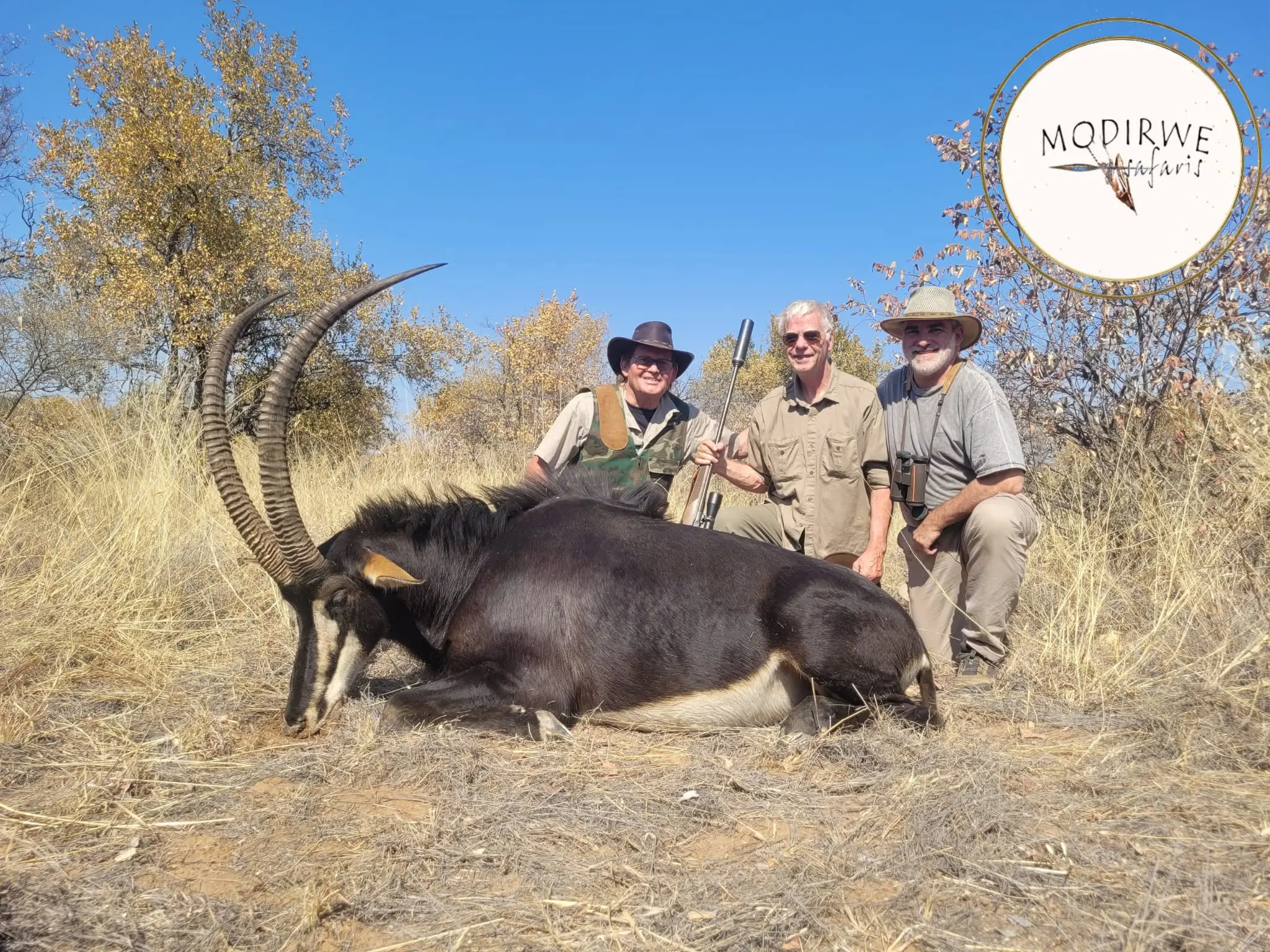
The Sable Antelope, Hippotragus niger, is one of Africa's most recognisable antelope species.
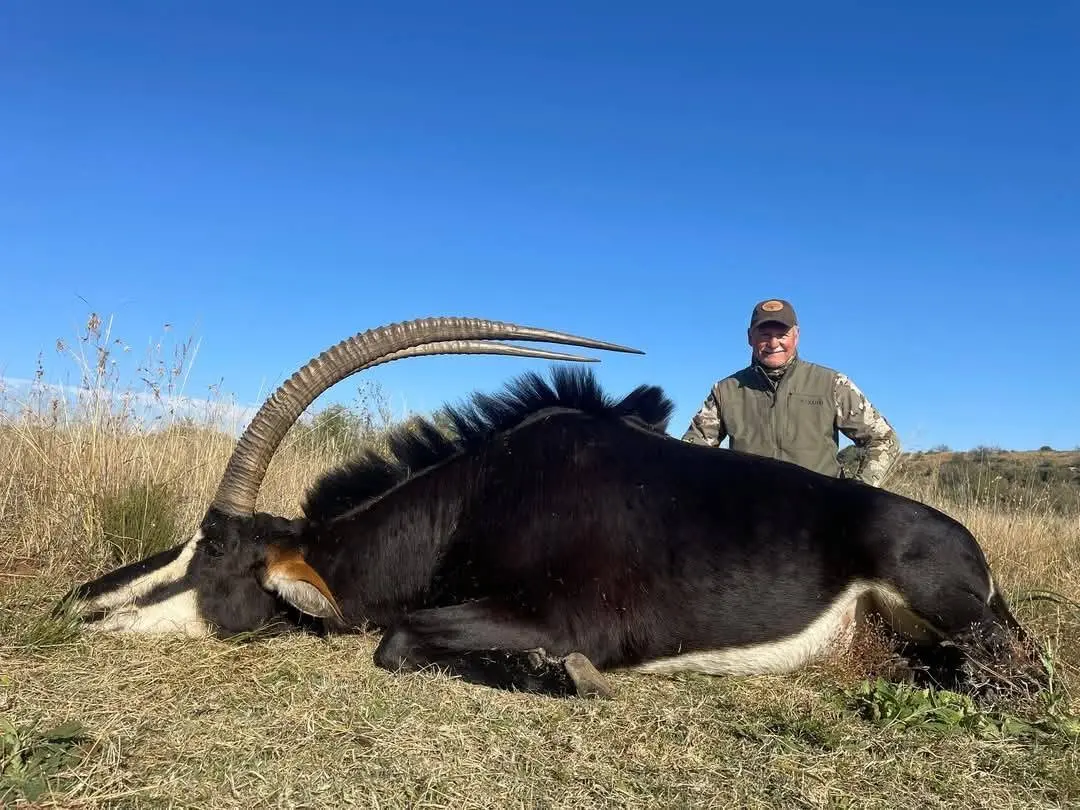
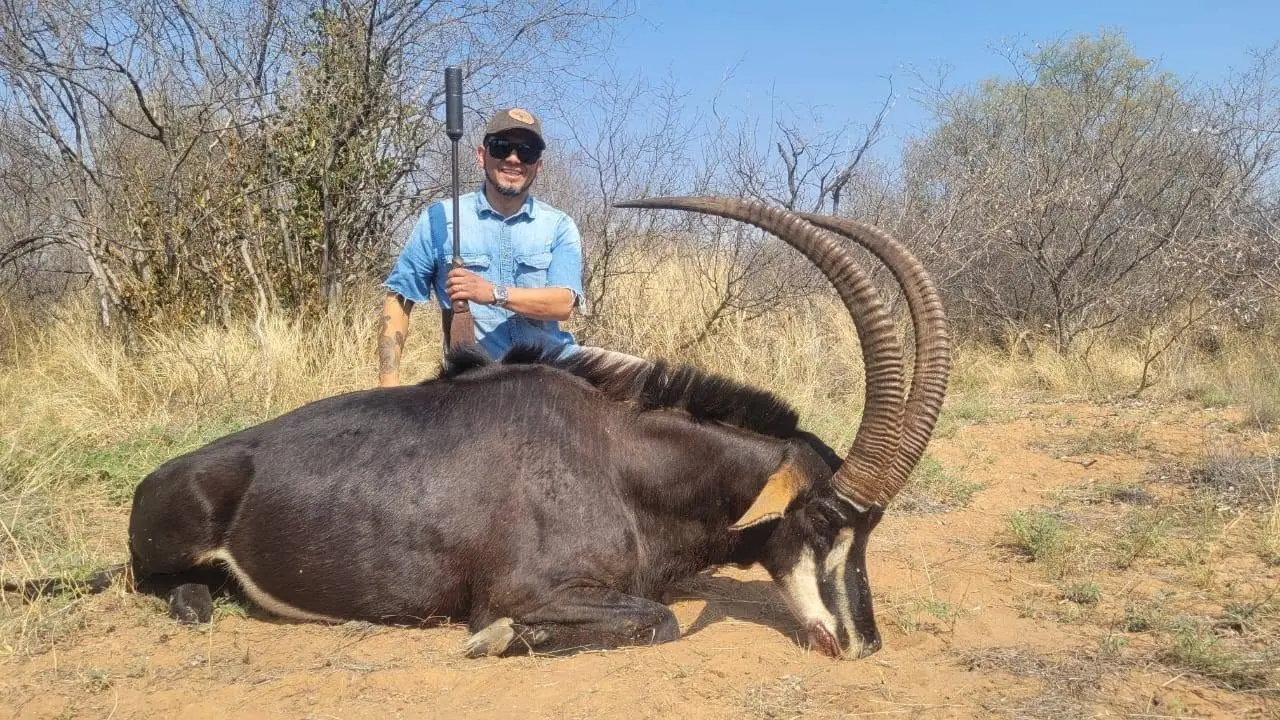
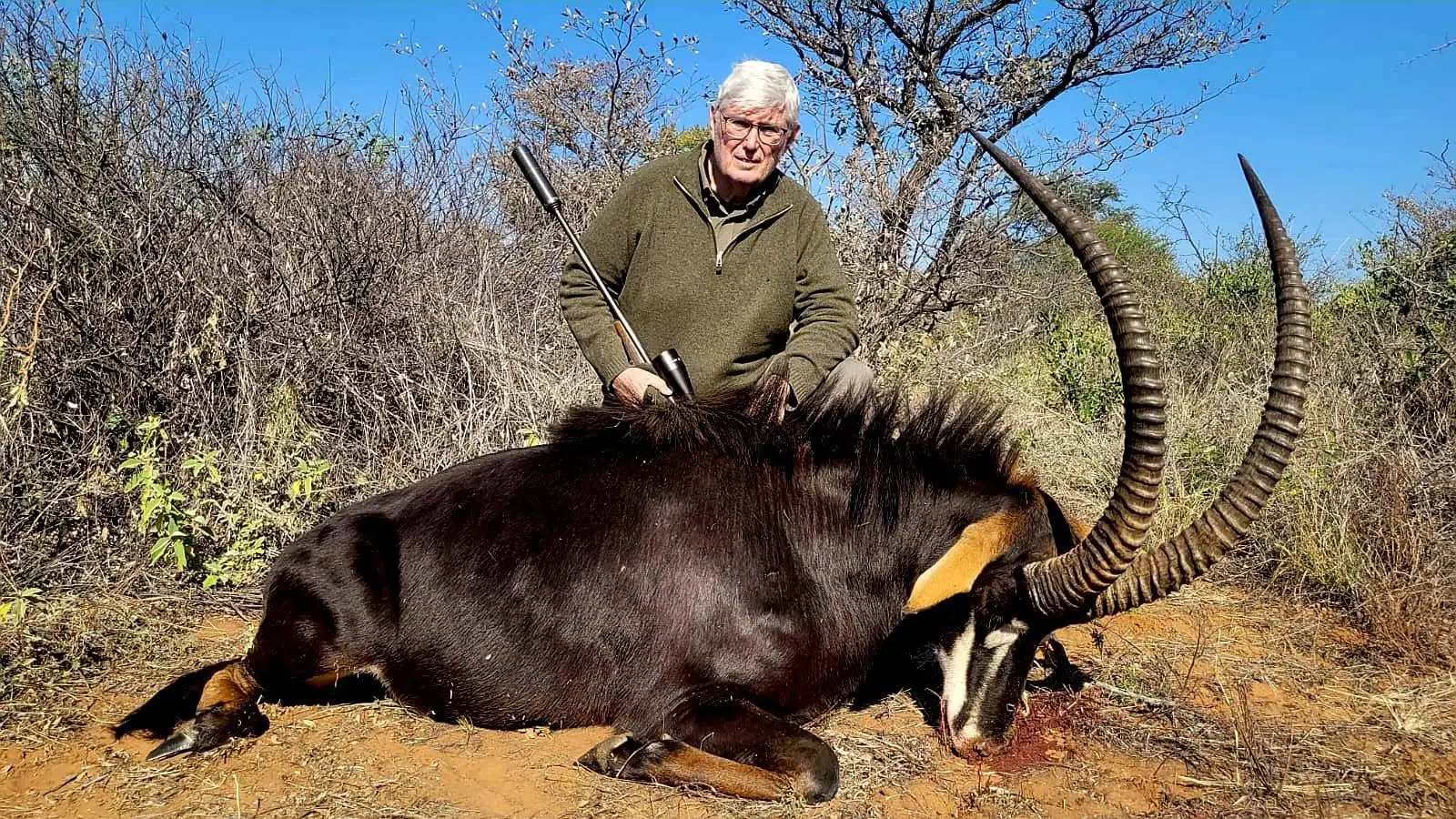
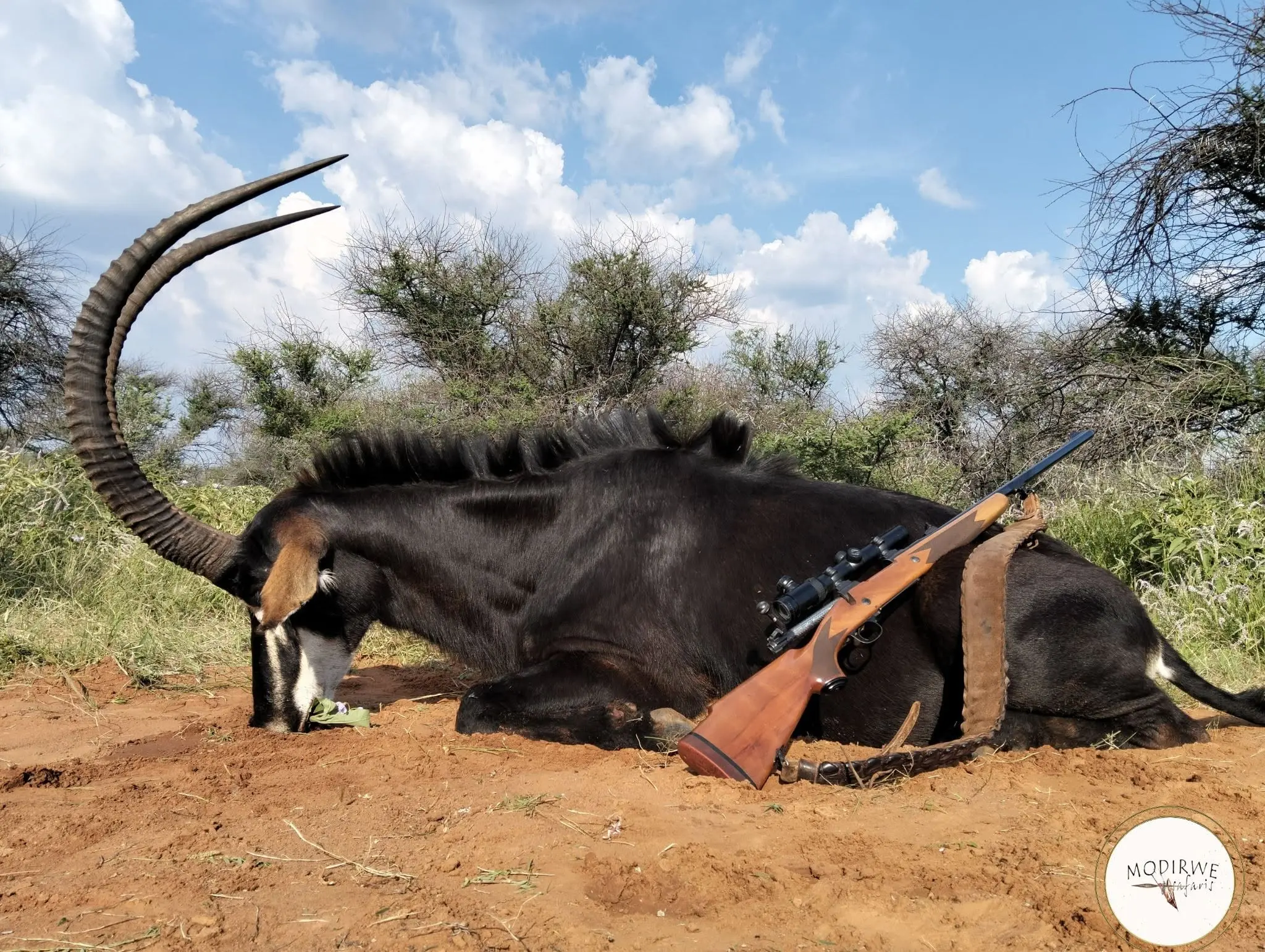
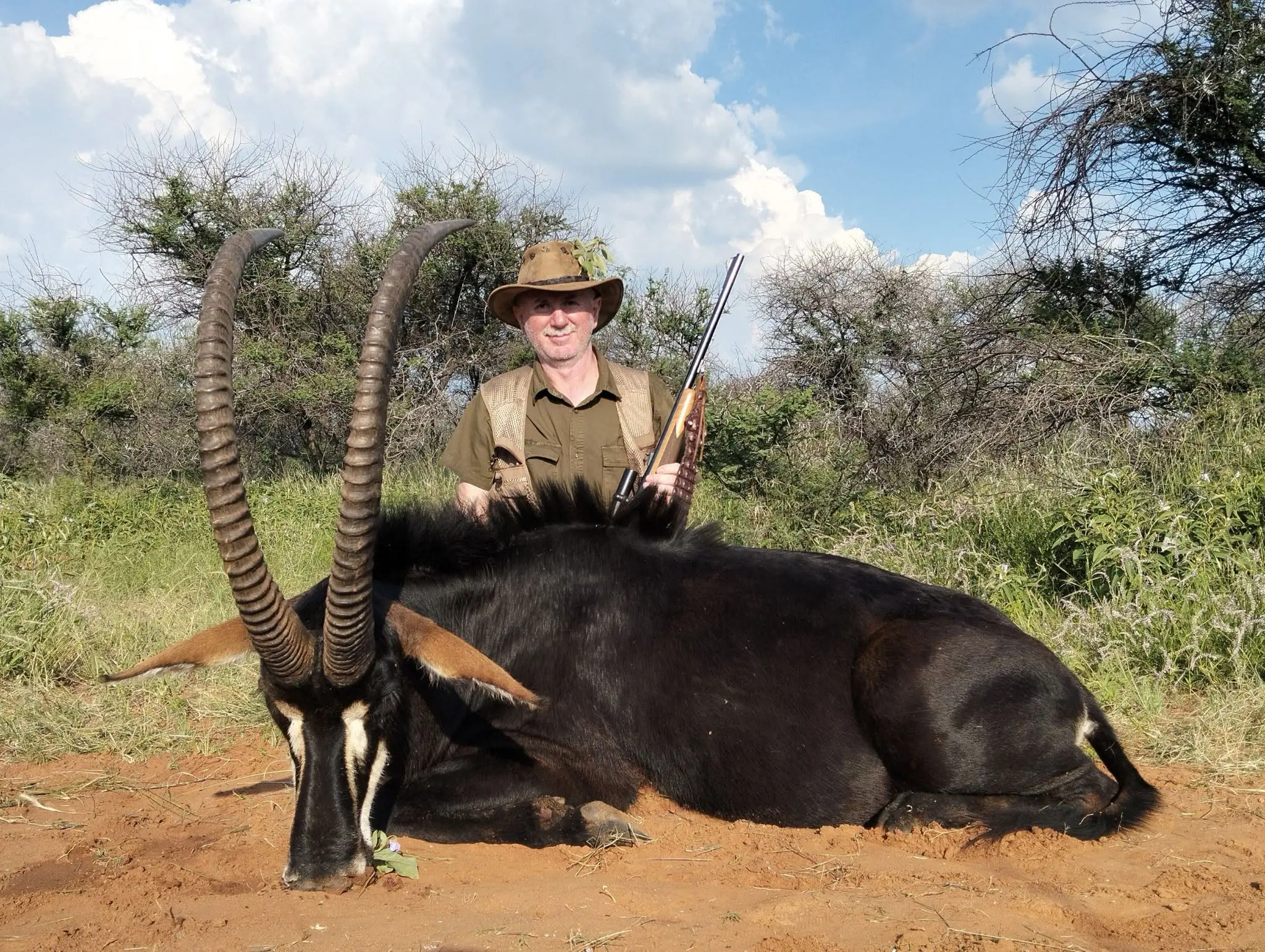
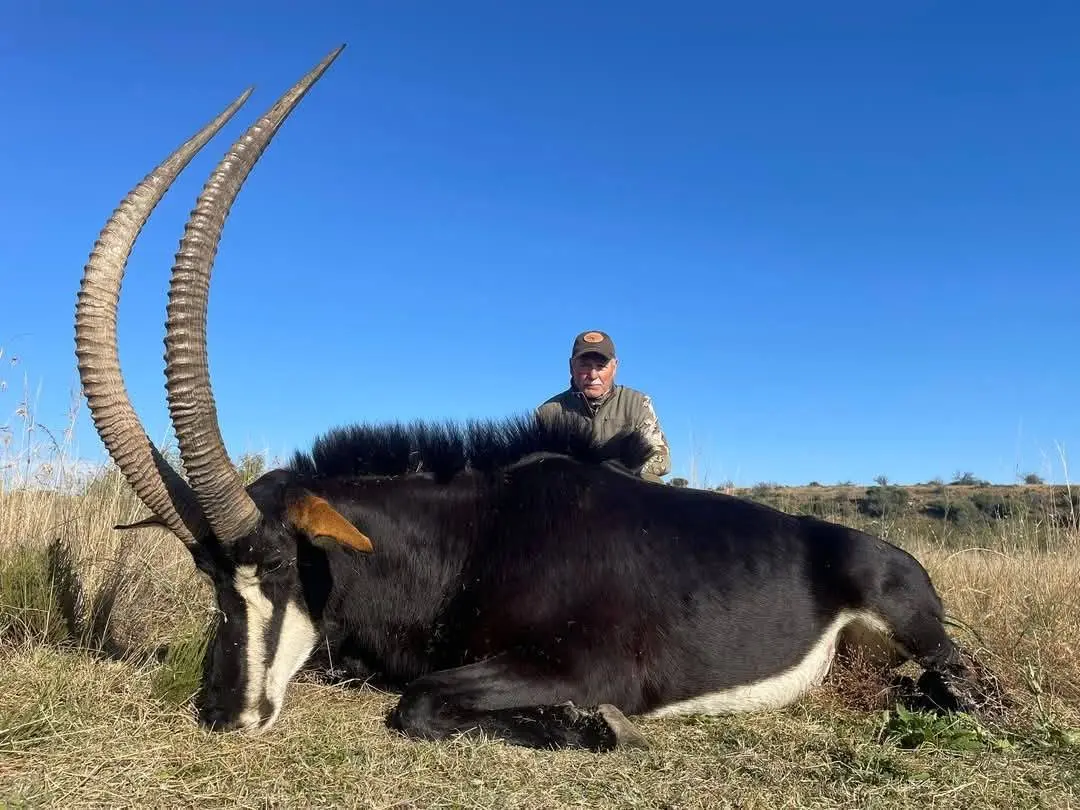
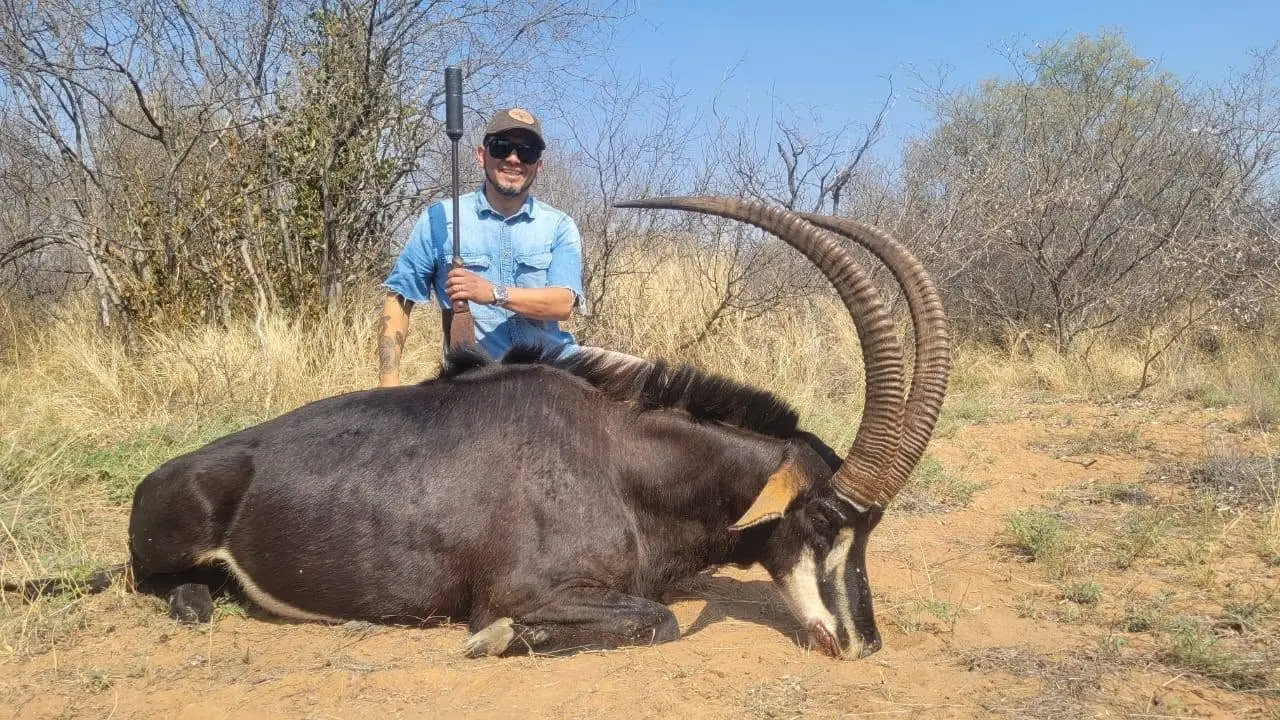
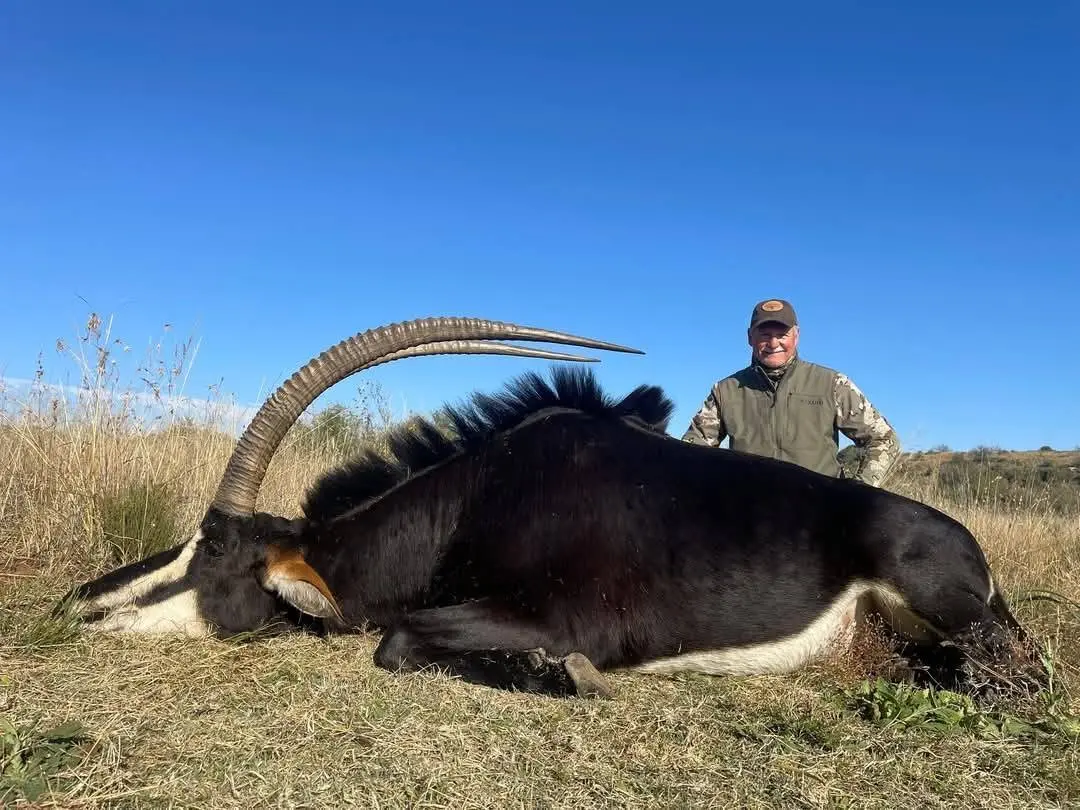
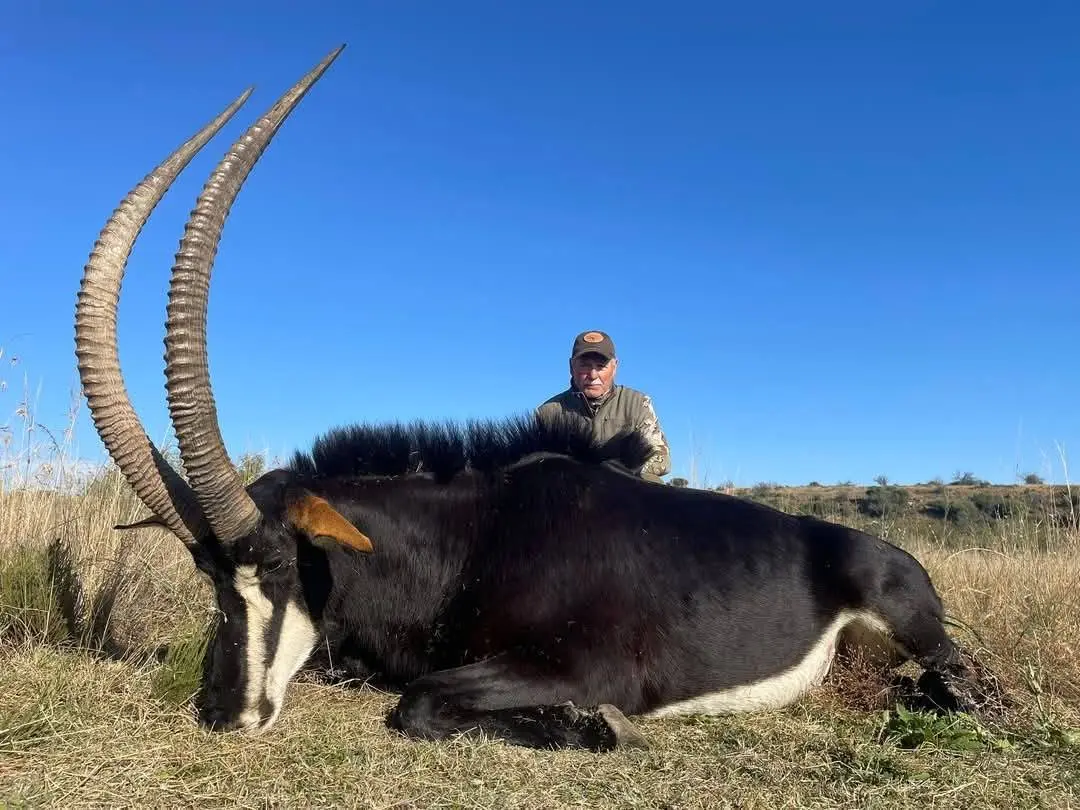
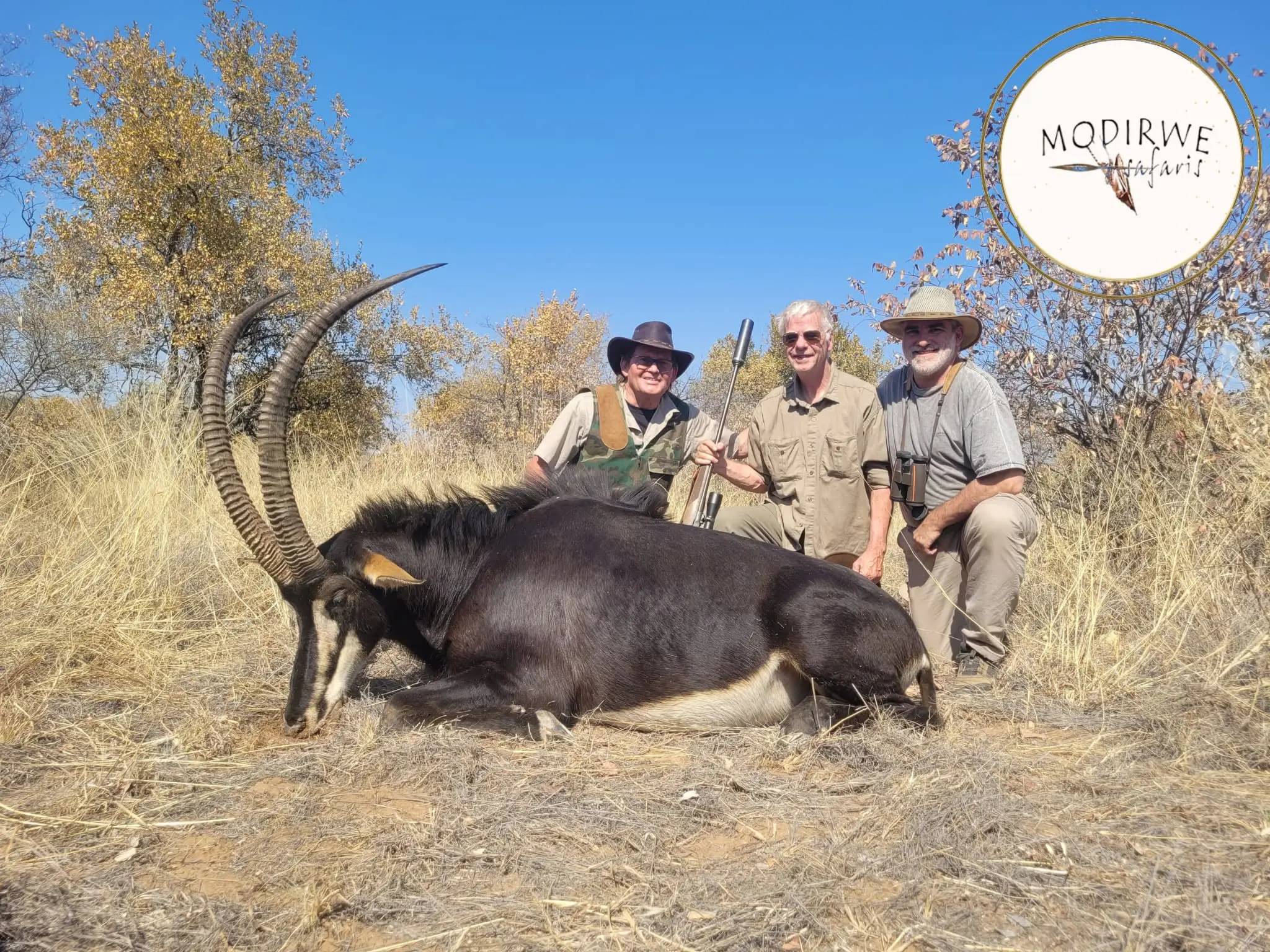
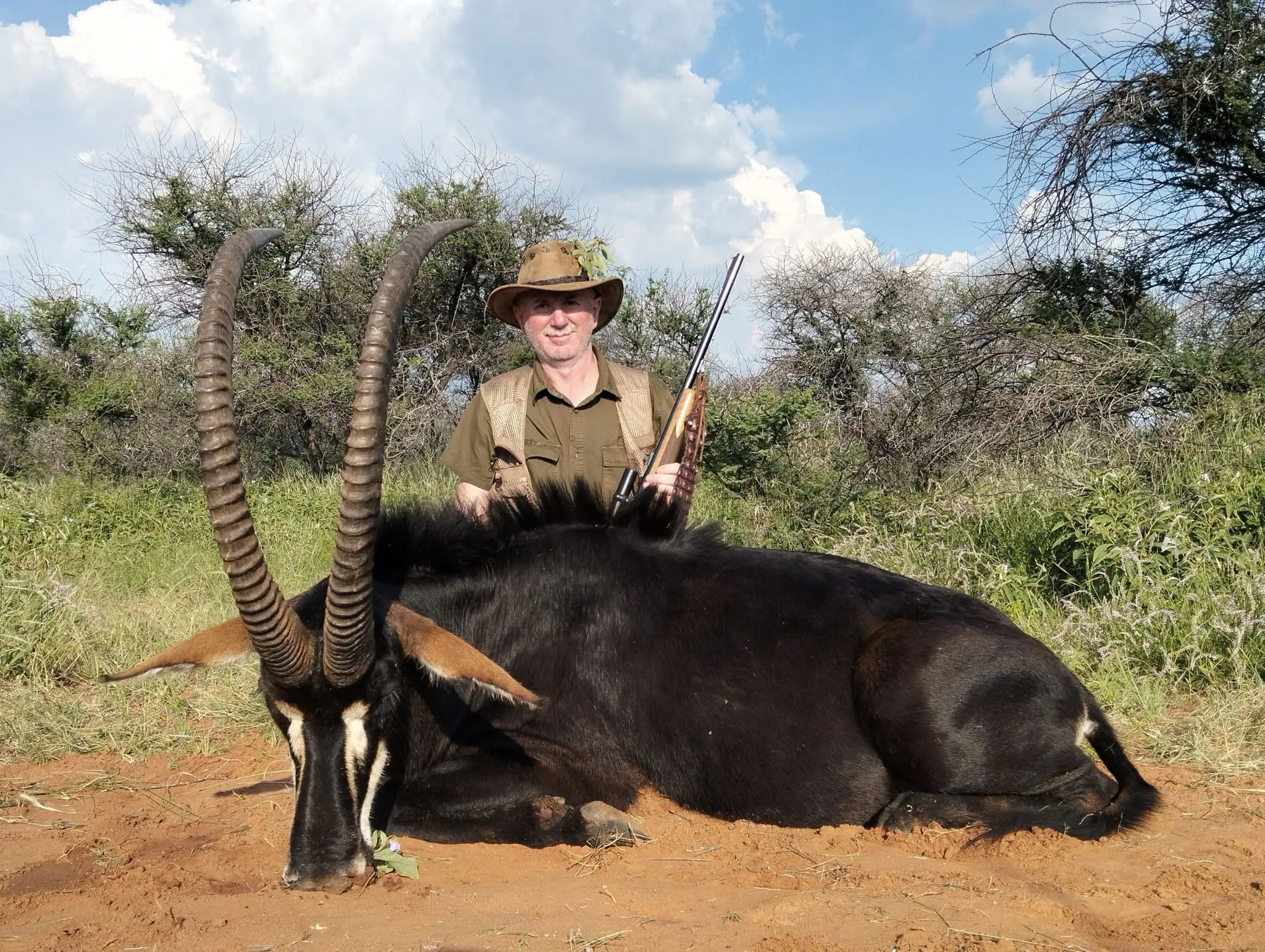
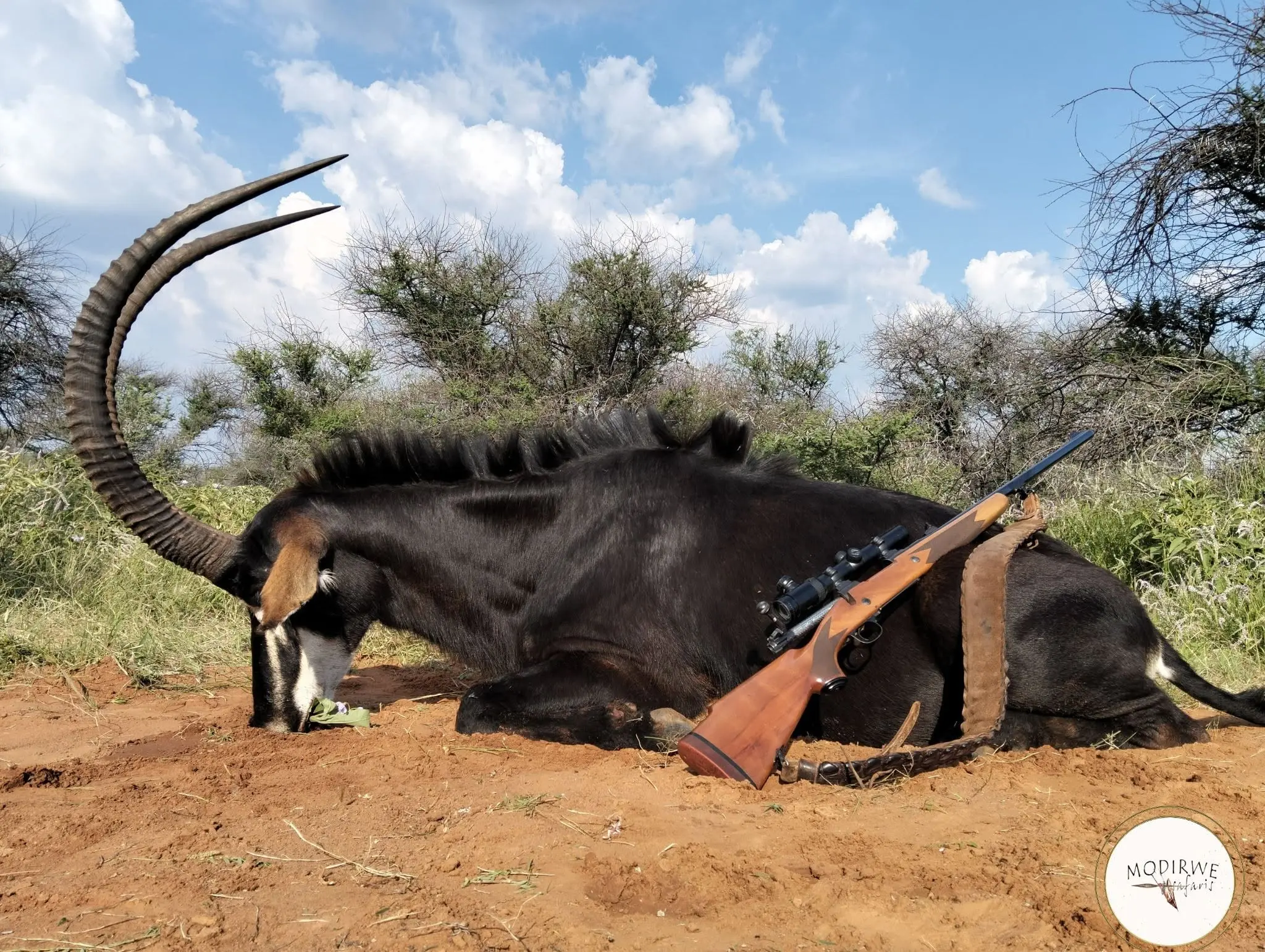
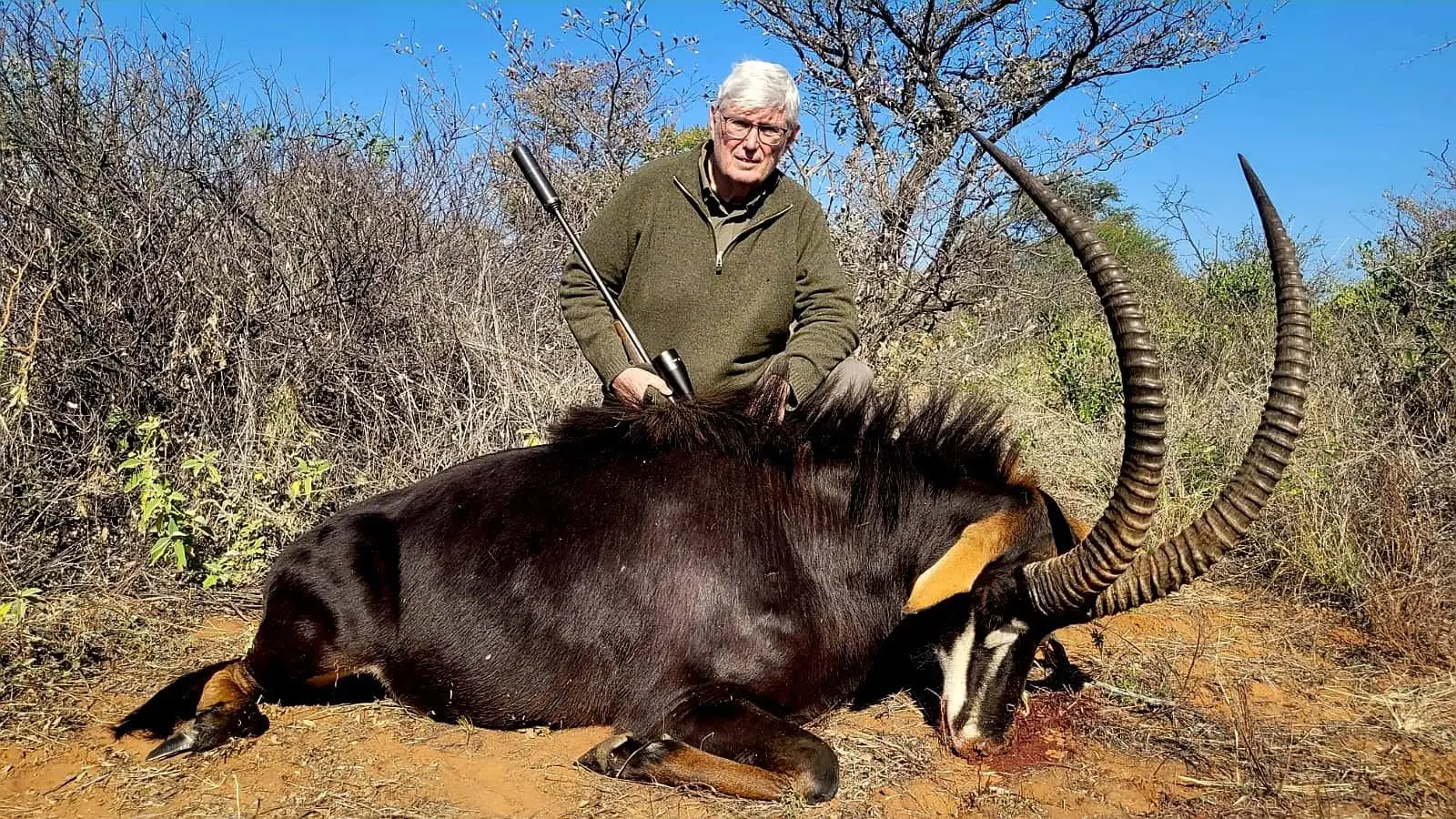
Mature bulls are particularly impressive. As males mature, their coats can become extremely dark, creating a striking contrast with their lighter underparts and distinctive white facial markings.
Both males and females carry horns, but mature bulls can develop exceptionally impressive backward-curving horns.
The combination of colour, horn shape, body size and behaviour gives the Sable a completely different appearance from most other plains-game species.
Sable are strongly associated with suitable savannah woodland and grassland environments where grazing, cover and access to water combine to create appropriate habitat.
Where Do Sable Naturally Occur in South Africa?
SANBI's South African assessment records the natural South African distribution of Sable as including:
- Northern Limpopo
- The Lowveld of eastern Mpumalanga
- Areas extending west toward North West Province
Sable have also been introduced to private wildlife properties and reserves outside parts of their historical natural distribution.
That distinction is important when discussing wildlife conservation. The fact that a species occurs on a property today does not necessarily mean that the property formed part of its original historical range.
What Is a Roan Antelope?
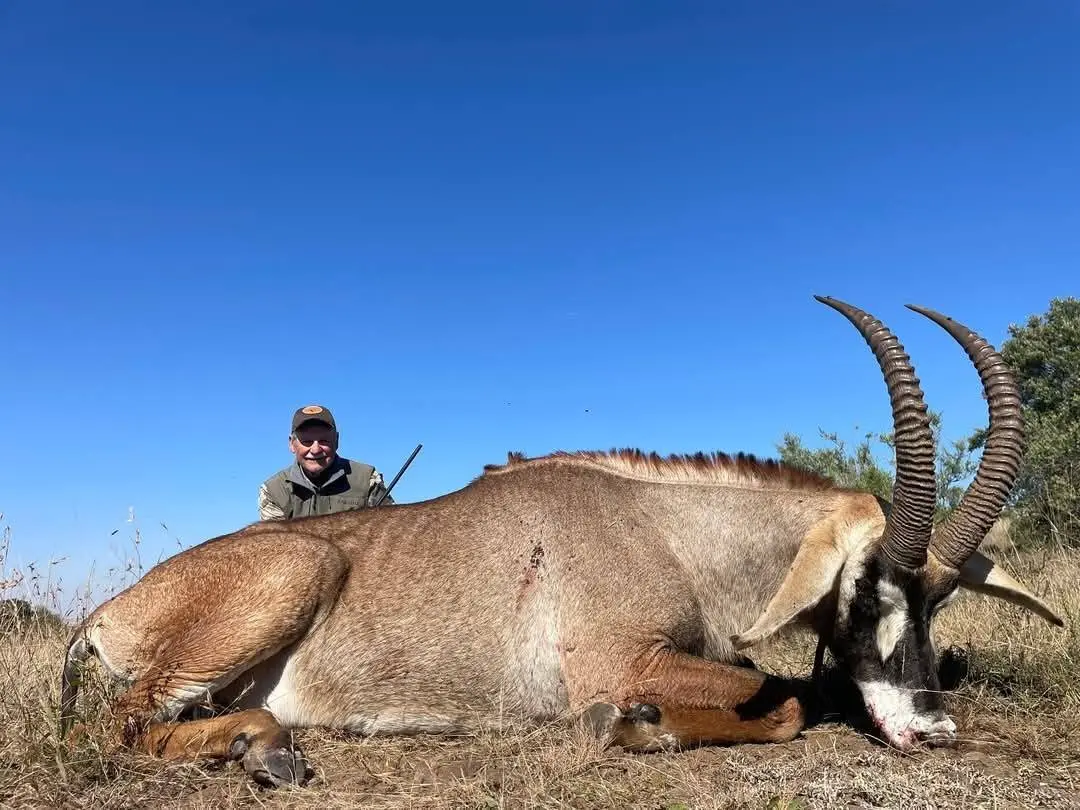
The Roan Antelope, Hippotragus equinus, is a close relative of the Sable and belongs to the same genus.
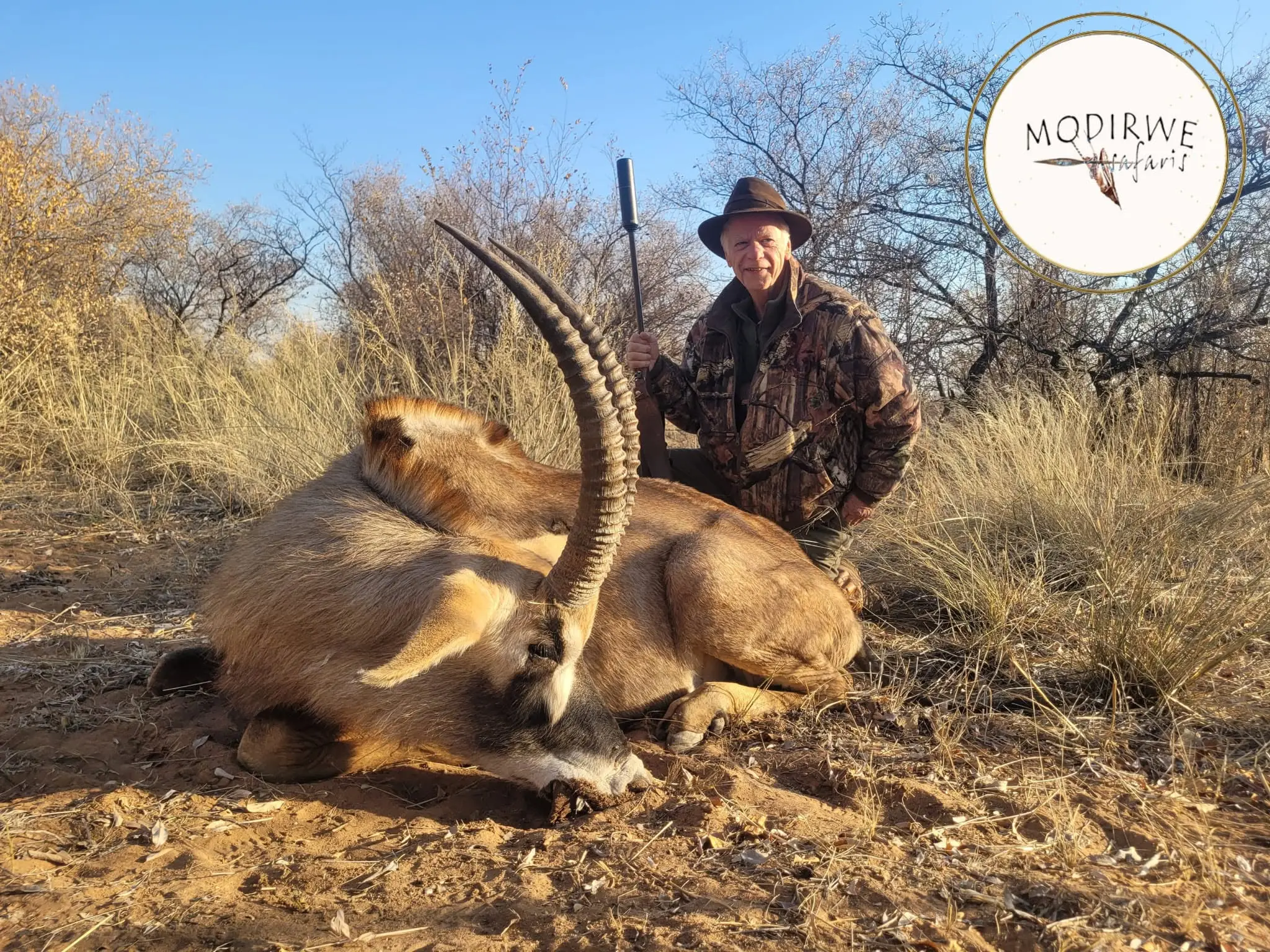
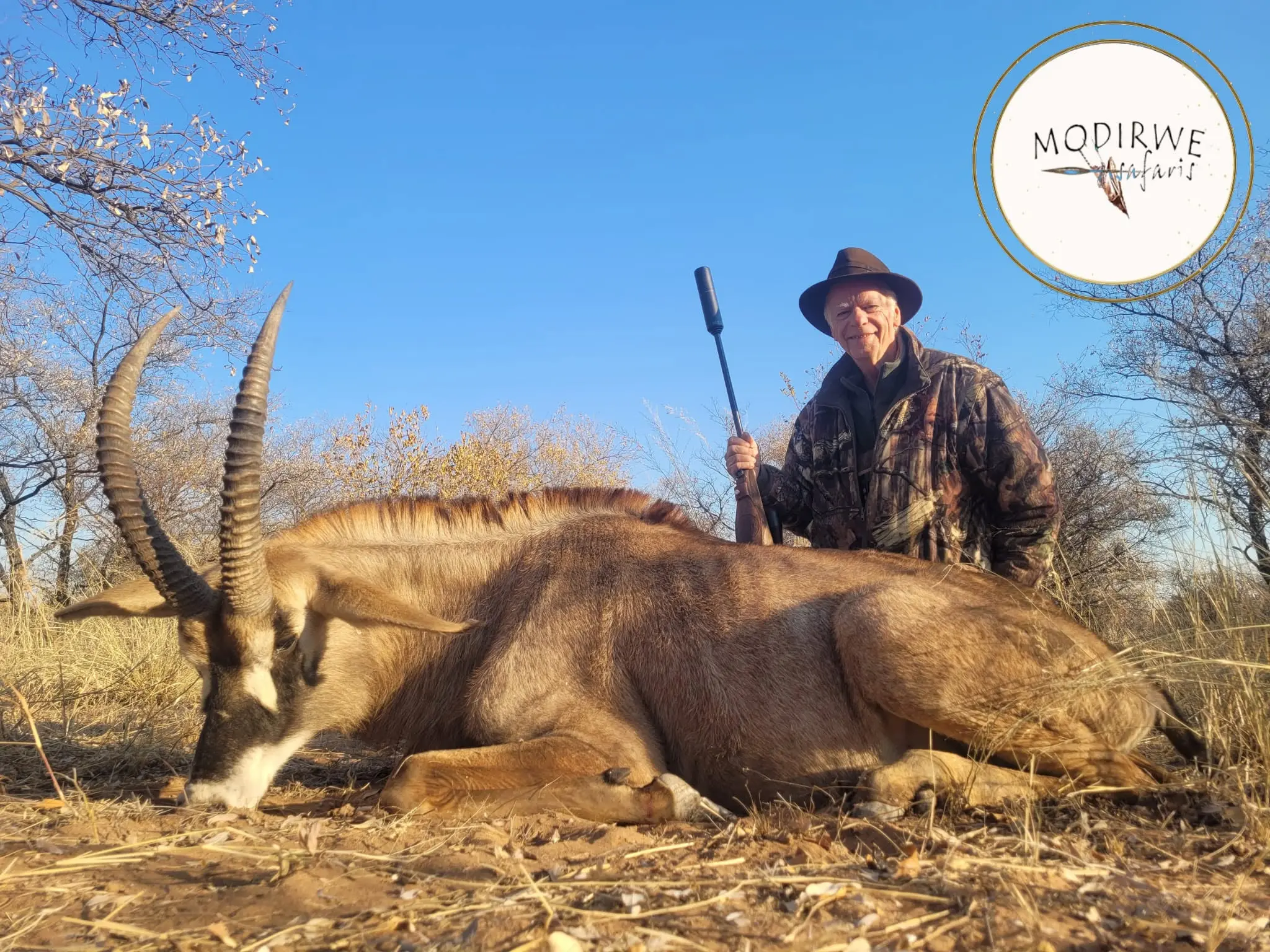
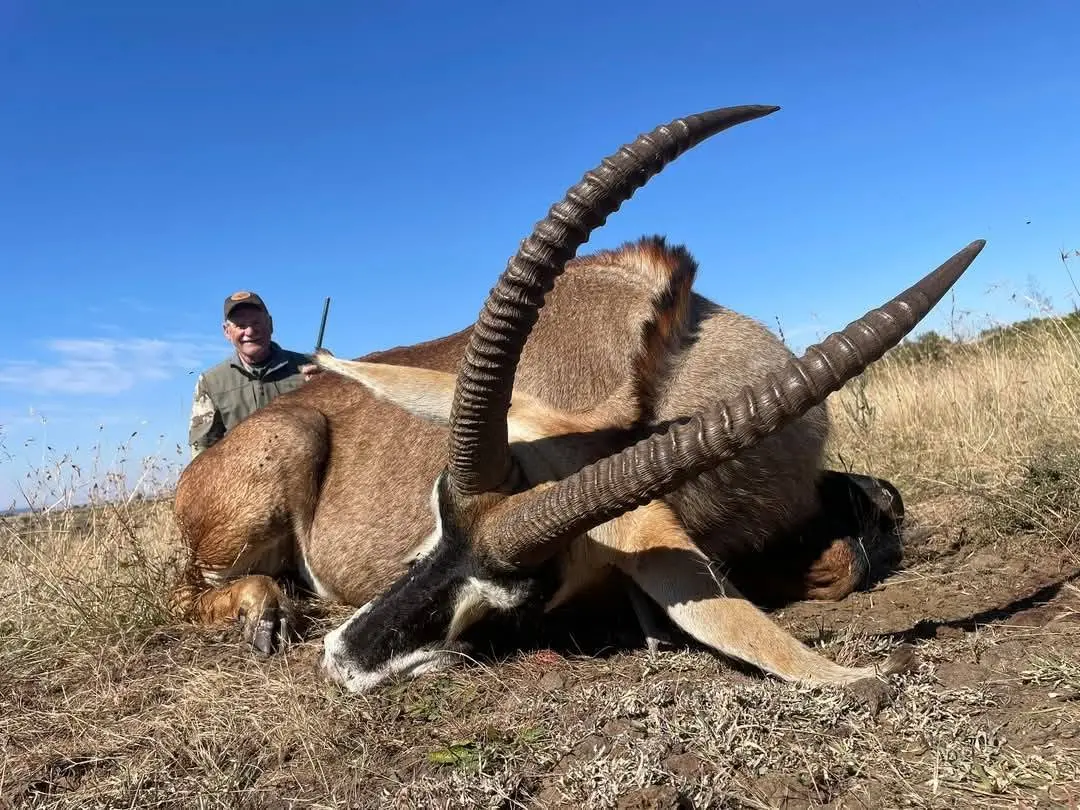
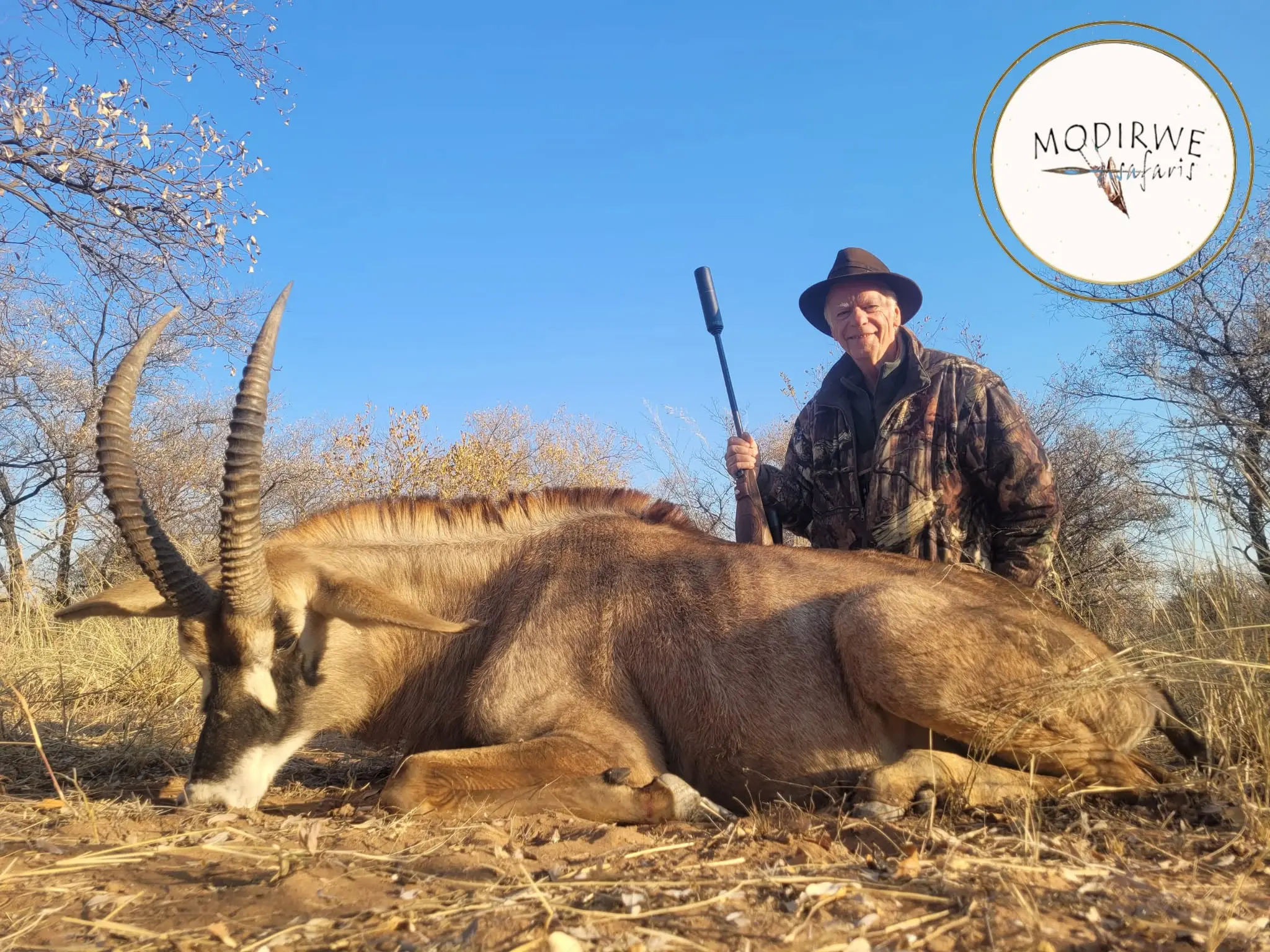
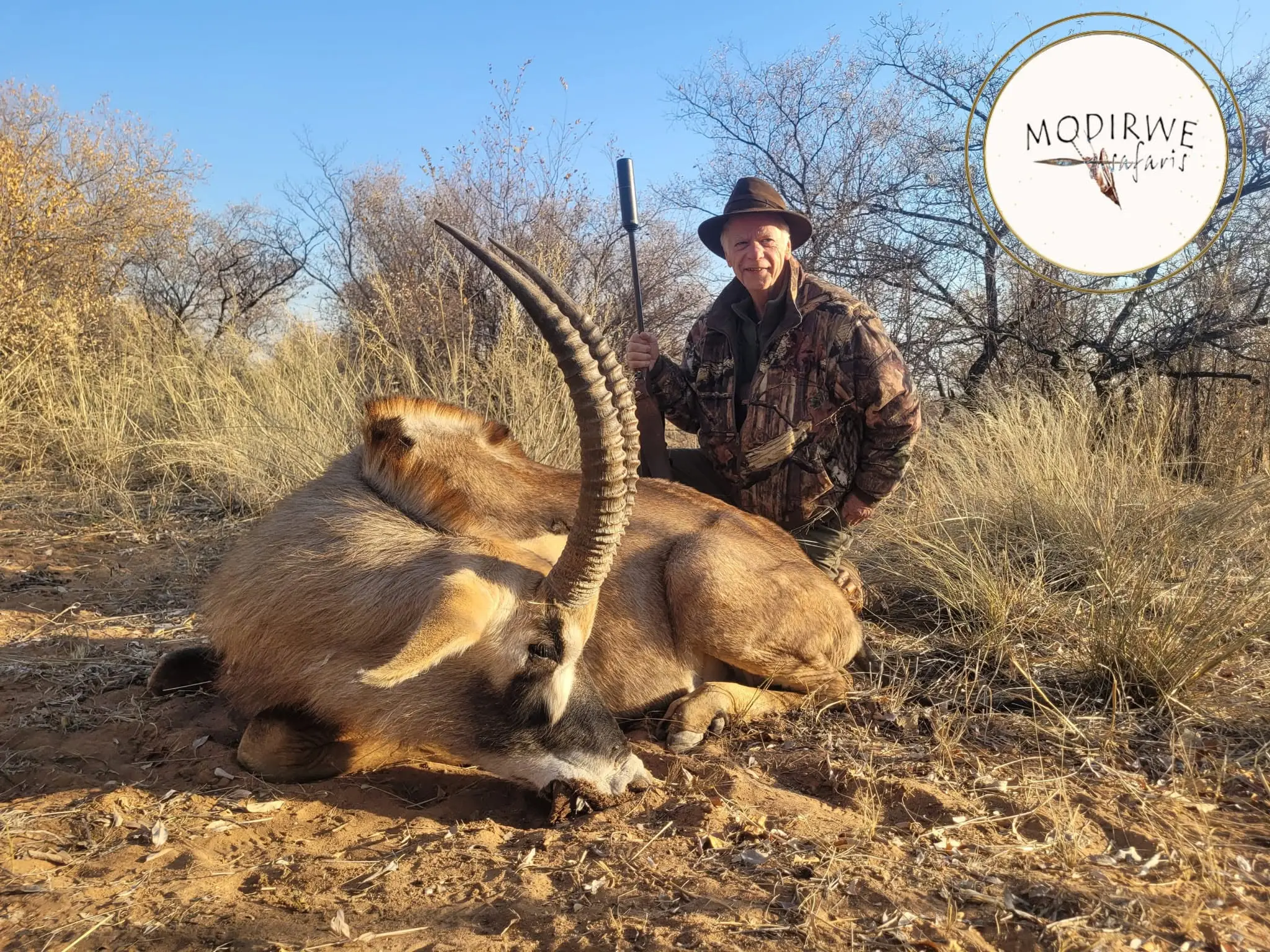
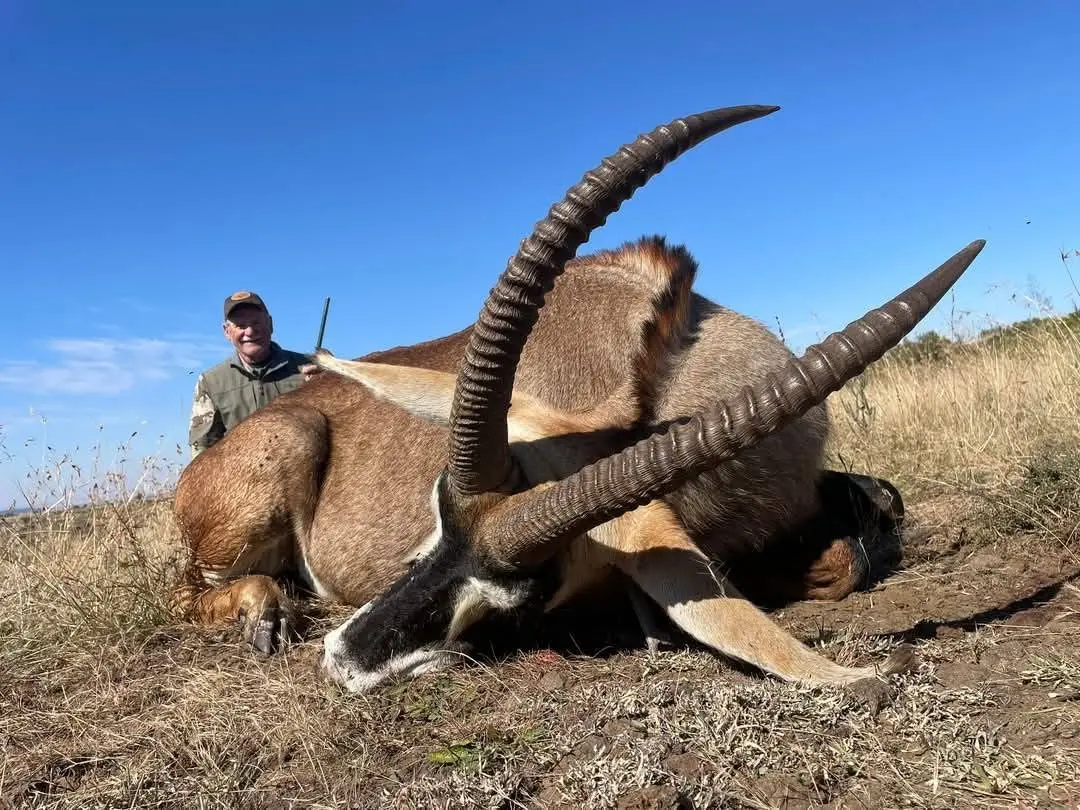
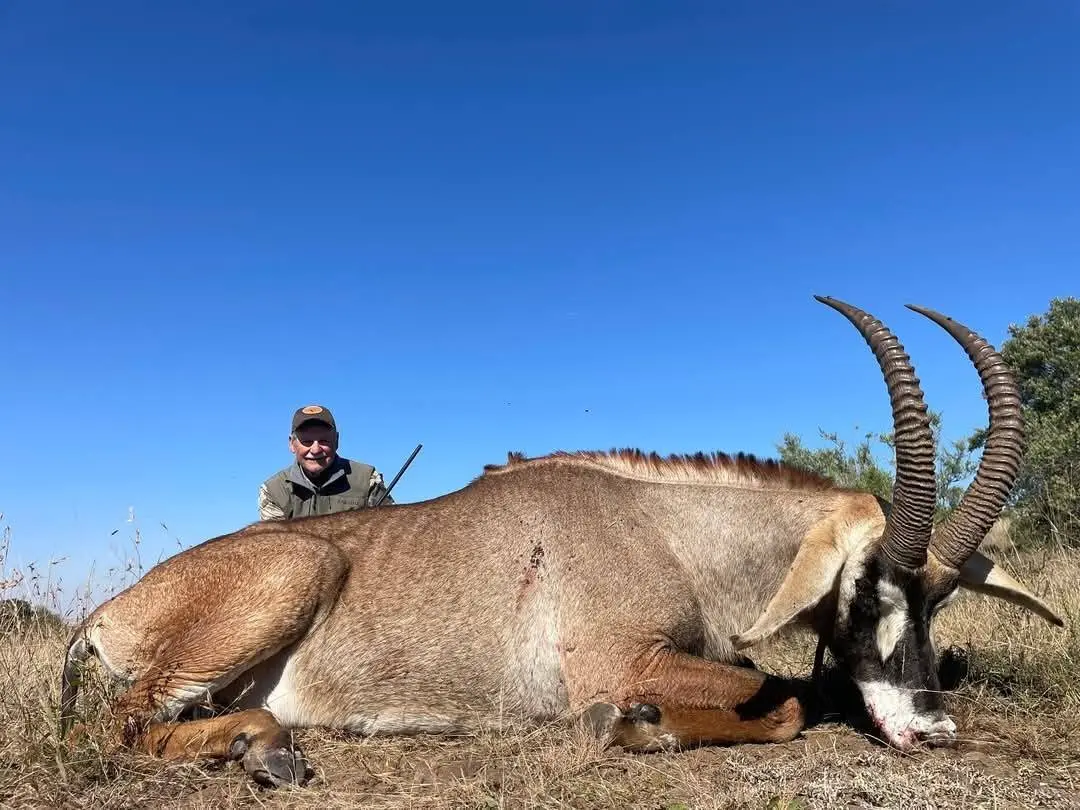
Roan generally have a lighter overall appearance than mature Sable bulls. Their distinctive black-and-white facial markings, large ears, strong body and sweeping horns make them easy to recognise.
They are among Africa's larger antelope and can appear particularly imposing when encountered in the bush.
Roan are associated with savannah woodland and grassland habitat. Suitable grass structure, woody cover, water and the level of competition from other grazers can all influence habitat quality.
This makes habitat management an especially important part of maintaining healthy Roan populations.
Roan Antelope and Limpopo
Roan have an important historical connection with Limpopo.
SANBI records natural Roan populations within the province and identifies the Waterberg as an important part of the species' South African history.
They naturally occur at relatively low densities and can be sensitive to changes in habitat quality.
For anyone interested in Roan, the habitat and management behind the animal are therefore part of what makes the species so interesting.
Sable vs Roan: What Is the Difference?
Mature Sable bulls can become very dark, with striking white facial markings and long backward-curving horns. They are associated with suitable savannah woodland and grassland habitat, grazing and access to water.
Roan Antelope — Hippotragus equinus
Roan generally have a lighter brown or roan-coloured appearance, prominent black-and-white facial markings and noticeably large ears. They are associated with savannah woodland and grassland and can be particularly sensitive to habitat condition and grazing competition.
What they share
Both are large African antelope belonging to the genus Hippotragus. Both carry impressive horns and both benefit from thoughtful habitat, population and genetic management.
What Makes Sable Hunting in Limpopo Different?
A Sable safari is about far more than simply locating a dark antelope with long horns.
The hunting experience varies according to the property, vegetation, season, weather and behaviour of the animals.
A typical hunt can involve searching suitable habitat, identifying groups or individual animals and then allowing the Professional Hunter enough time to properly evaluate what has been found.
That evaluation can include:
- The maturity of the animal
- Body condition
- Horn development
- Horn shape and mass
- Other animals in the group
- The surrounding terrain
- The background and shooting position
- Whether a suitable and ethical opportunity is available
Finding an animal does not automatically mean that the hunt is finished.
Patience remains an important part of a good safari.
What Makes Roan Hunting Different?
Roan can offer a different experience.
Their habitat preferences and relatively low natural densities mean that understanding the area can be particularly important.
Time may be spent searching suitable grazing areas, studying tracks and observing animals before an individual is considered.
The Professional Hunter must still consider the animal, the terrain, the conditions and whether the opportunity is appropriate.
That process is part of the safari rather than something that should be rushed.
Walk-and-Stalk Hunting in the Limpopo Bushveld
One of the experiences Modirwe Safaris values is traditional walk-and-stalk hunting.
Depending on the hunting area and conditions, a hunt may begin by covering ground and searching for animals or fresh sign before continuing on foot.
Once a suitable animal has been located, the next part of the hunt can require patience, careful movement and cooperation between the hunter and Professional Hunter.
Wind direction, vegetation, terrain, other animals and visibility can all affect how a stalk develops.
Sometimes everything comes together quickly.
At other times, the bush wins and the stalk begins again.
That uncertainty is part of what makes an African hunting safari memorable.
Conservation, Management & Hunting of Sable and Roan
Responsible wildlife management is an important part of the Sable and Roan story in South Africa.
Their conservation status also needs to be understood in the correct context.
At the global species level, both the Sable Antelope (Hippotragus niger) and Roan Antelope (Hippotragus equinus) are currently classified as Least Concern (LC) under the IUCN Red List framework.
SANBI's most recent regional South African assessments currently displayed on its Species Status portal are dated January 2016.
Those regional assessments classify:
Sable Antelope — Vulnerable (VU)
Roan Antelope — Endangered (EN)
These classifications should not be treated as contradictory.
A global assessment considers a species across its wider geographical range, while a regional assessment examines the population within a particular assessment region.
SANBI's South African assessments also distinguish qualifying wild and free-roaming populations from many intensively managed populations on private wildlife properties.
For this reason, the South African regional Red List categories should not simply be interpreted as a count of every Sable or Roan living on every wildlife property in South Africa.
Does Conservation Status Mean Hunting Is Automatically Prohibited?
No.
A Red List category is an assessment of extinction risk. It is not, by itself, a hunting permit or a complete statement of the legal conditions applying to an individual animal.
Whether a particular hunt may legally take place depends on the legislation, permits and conditions applicable to that hunt.
Factors can include:
- The province
- The species
- The hunting property or area
- Applicable permits and authorisations
- The hunting method
- Current wildlife-management requirements
Responsible hunting and wildlife management therefore require more than simply seeing a species listed on a website or price list.
Why Is Habitat Management Important?
Healthy wildlife populations depend on healthy habitat.
SANBI's assessments identify habitat quality and wildlife management as important considerations for both Sable and Roan.
For Sable, conservation concerns discussed by SANBI include factors such as:
- Habitat degradation
- Inappropriate habitat management
- Competition with other grazers
- Poorly considered translocations
- Genetic integrity
For Roan, important considerations include:
- Habitat loss and degradation
- Habitat fragmentation
- Grazing competition
- Genetic management
- Maintaining populations capable of functioning in suitable natural systems
Wildlife management is therefore about considerably more than having animals on a property.
Habitat, grazing, water, genetics, population structure, carrying capacity and long-term land management all matter.
Can Sable and Roan Be Rifle Hunted in South Africa?
Yes, where the particular hunt is legally authorised and the applicable requirements have been satisfied.
South Africa's published National Norms and Standards for Hunting Methods include both Sable and Roan in the rifle-hunting category with a national minimum bullet-weight requirement of:
This is a national minimum standard.
It should not be interpreted as meaning that every rifle, calibre, ammunition combination or 150-grain projectile is automatically appropriate for every Sable or Roan hunt.
Your equipment should be discussed with your outfitter and Professional Hunter before the safari.
Considerations include the species, ammunition, expected terrain, likely hunting conditions and the hunter's familiarity with the equipment.
What About Bow Hunting?
Bow hunting offers a very different African safari experience.
It normally places greater emphasis on getting close to the animal, patience, concealment, shot opportunity and suitable equipment.
South Africa's national hunting-method standards explicitly include Sable in the large-game bow-hunting category.
The published national minimums for that category include:
- 60 ft/lb minimum kinetic energy
- 415-grain minimum arrow weight
Additional requirements and conditions may apply.
These national minimums should not replace the advice of the Professional Hunter or the current legal requirements applicable to the particular hunt.
What About Bow Hunting Roan?
Roan requires a little more care when discussing the national bow-hunting standard.
The published national large-game bow section explicitly names Sable among the species included in that category, but Roan is not individually named in the same list.
That should not be used to make assumptions in either direction about a specific Roan bow hunt.
If you are interested in bow hunting Roan, confirm the current requirements before booking or preparing equipment.
Modirwe Safaris can assist with planning the safari, while the applicable provincial and legal requirements should be confirmed for the specific hunt.
When Is the Best Time for a Sable or Roan Safari?
There is no single date that is automatically perfect for every hunter.
Limpopo changes considerably through the year, and different conditions can create different safari experiences.
The cooler and generally drier part of the traditional hunting season can provide easier walking conditions and reduced vegetation in some areas.
Other periods can offer greener scenery and a very different bushveld experience.
The better approach is to choose dates according to:
- The species you want to hunt
- Current animal availability
- The hunting area
- Your preferred hunting method
- The length of your safari
- Other species on your wishlist
- Your travel schedule
Contact Modirwe before booking flights so that your intended dates and species can be discussed together.
Can Sable and Roan Be Combined With Other Plains Game?
Yes, depending on the current safari offering and availability.
A Sable or Roan safari does not necessarily need to focus on only one species.
Hunters may also be interested in species such as:
- Greater Kudu
- Impala
- Blue Wildebeest
- Plains Zebra
- Waterbuck
- Nyala
- Red Hartebeest
- Eland
- Warthog
- Other available plains-game species
The exact combination should be planned around the number of hunting days, current availability and the experience you want from the safari.
For more information about some of these species, read our Plains Game Safari in South Africa guide →
Where Can I Find Current Sable and Roan Pricing?
Modirwe Safaris publishes dedicated current price lists for international hunters.
We deliberately do not reproduce individual Sable or Roan prices in this article.
Safari pricing, species categories, packages and availability can change between seasons.
Keeping pricing in the official price lists means that someone discovering this article in the future is less likely to plan a safari using an outdated price copied from an older blog post.
For current availability and a personalised quotation, contact Modirwe Safaris directly →
Does Modirwe Offer Sable and Roan Safari Packages?
Modirwe Safaris publishes seasonal hunting packages that can include Sable, Roan and other African game species.
Packages can change between seasons, so an older blog article should not be used as a permanent promise of package contents or pricing.
The following can change:
- Species combinations
- Number of hunting days
- Accommodation nights
- Species or size categories
- Package inclusions
- Availability
If Sable or Roan is a priority species for you, contact us with your preferred dates before finalising your travel arrangements.
Why Can Sable Appear in Different Size Categories?
Safari price lists may separate Sable into different horn-size categories.
These categories form part of the commercial structure of a particular safari offering.
They do not mean that horn length is the only factor that makes an animal or hunting experience memorable.
A Professional Hunter may consider characteristics such as:
- Maturity
- Horn shape
- Horn mass
- Symmetry
- Body condition
- The individual animal
- The circumstances of the hunt
Always use the latest official Modirwe Safaris price list for the categories currently being offered.
What Should You Tell Modirwe When Planning Your Safari?
If Sable or Roan is one of your priority species, giving us a little information beforehand makes planning much easier.
Tell us:
- Your preferred travel dates
- Number of hunters
- Number of observers or non-hunters
- Whether Sable or Roan is a priority
- Other species on your wishlist
- Whether you prefer rifle or bow hunting
- Whether you intend to bring your own rifle
- Whether rifle hire may be required
- How many hunting days you are considering
This allows the safari to be discussed around what is actually available for your intended dates rather than relying on a generic website description.
Travelling to South Africa for Your Safari
International hunters should begin preparing well before departure.
If you intend to bring your own rifle into South Africa, read our:
Bringing Your Rifle to South Africa: SAPS 520 Guide →
For airport, transfer, luggage and general travel planning, read:
Flying to South Africa for a Limpopo Hunting Safari →
You can also use the:
Modirwe Safaris Packing Guide →
Requirements can change, particularly where firearms, airlines, international travel and permits are involved, so always verify the current requirements before departure.
More Than the Hunt
A safari at Modirwe is about more than the species on a wishlist.
It is the early morning before the bush is fully awake.
It is following tracks through the Limpopo bushveld, stopping to study wildlife, spending time with your Professional Hunter and experiencing South Africa away from the normal tourist route.
It is also returning to camp, sharing a meal, relaxing with friends and family and watching another African day come to an end.
Some guests travel primarily to hunt.
Others combine hunting with photography, sightseeing, tourism trips and time relaxing at the lodge.
That is why we prefer to plan the safari around the people coming to Africa, rather than trying to make every group fit exactly the same itinerary.
Frequently Asked Questions
What is the scientific name of the Sable Antelope?
The Sable Antelope is Hippotragus niger.
What is the scientific name of the Roan Antelope?
The Roan Antelope is Hippotragus equinus.
Are Sable and Roan related?
Yes. Both belong to the genus Hippotragus, but they are separate species with different appearance, ecology and conservation histories.
Do Sable naturally occur in Limpopo?
Yes. SANBI's regional South African assessment includes northern Limpopo within the natural South African distribution of Sable.
Do Roan naturally occur in Limpopo?
Yes. SANBI records natural Roan occurrence within parts of Limpopo and discusses the historical importance of the Waterberg region.
Are Sable endangered?
The answer depends on which assessment is being discussed. At the global species level, Sable is currently classified as Least Concern under the IUCN framework. SANBI's January 2016 regional South African assessment currently displayed on its Species Status portal classifies Sable as Vulnerable.
Are Roan endangered?
Again, the geographical assessment matters. At the global species level, Roan is currently classified as Least Concern. SANBI's January 2016 regional South African assessment currently displayed on its portal classifies Roan as Endangered within the South African assessment region.
Does Endangered or Vulnerable automatically mean the animal cannot be hunted?
No. Red List categories assess extinction risk and are not themselves hunting permits. A particular hunt must comply with the legislation, authorisations and conditions applicable to the province, property, species and hunting method.
Can Sable and Roan be rifle hunted?
Yes, where the hunt is legally authorised. South Africa's published national hunting-method standards include both Sable and Roan in the rifle category with a 9.9 g / 150-grain minimum bullet-weight requirement.
Can Sable be bow hunted?
South Africa's published national hunting-method standards explicitly include Sable in the large-game bow category. Current national minimums for that category include 60 ft/lb kinetic energy and a 415-grain arrow, with additional requirements and applicable legal conditions still needing to be considered.
Can Roan be bow hunted?
Do not simply assume that requirements quoted for Sable automatically apply to a particular Roan hunt. Confirm the current requirements with Modirwe Safaris, your Professional Hunter and the appropriate authority before finalising equipment or travel arrangements.
Where can I find the current Sable price?
Use the latest official Modirwe Safaris USD or EUR price list. We intentionally do not reproduce the amount in this article because prices and categories can change.
Where can I find the current Roan price?
Use the latest official Modirwe Safaris price list or contact us directly for current pricing and availability.
Does Modirwe offer Sable and Roan packages?
Modirwe publishes seasonal hunting packages that can include Sable, Roan and other species. Check the latest official package document for the current offering.
Can I bring my own rifle to South Africa?
International hunters can travel with their own firearms provided the applicable South African temporary-import requirements and relevant airline and transit-country requirements are satisfied.
Read our SAPS 520 Guide → before travelling.
Can my family or non-hunting companions come with me?
Yes. A Modirwe safari can include hunters and non-hunting companions. Contact us when planning the trip so that hunting, accommodation and additional tourism activities can be discussed for the group.
Official & Reliable Sources
The conservation, species and regulatory information in this guide was checked against authoritative sources available when this article was reviewed.
- SANBI — Sable Antelope South African Red List Assessment
- SANBI — Roan Antelope South African Red List Assessment
- SANBI — Red List of South African Species
- IUCN Red List — Global Species Assessments
- South African Government — National Norms and Standards for Hunting Methods
Plan Your Sable or Roan Safari in Limpopo
Sable and Roan are two extraordinary African antelope, but a memorable safari begins with more than selecting an animal from a list.
It begins with the African bush.
It is the search for the right animal, the time spent walking and observing, the challenge of the stalk, the knowledge of the Professional Hunter and the experience shared with the people travelling with you.
If Sable, Roan or both are high on your African safari wishlist, send Modirwe Safaris your preferred dates, hunting method, number of guests and the other species you are interested in.
We can then discuss the options currently available for your safari.
View our current hunting packages , check the current price list , or contact Modirwe Safaris to discuss current availability and suitable dates.
Important Safari & Conservation Information
Please note: This article is provided for general educational and safari-planning purposes and reflects information available when it was last reviewed.
Conservation assessments, legislation, permits, hunting-method requirements, species availability, safari pricing and packages can change.
The South African Sable and Roan conservation categories discussed in this article refer to the regional assessments currently displayed by SANBI and dated January 2016. Global and regional conservation assessments should not be treated as the same thing.
Red List status and the legal requirements applicable to an individual hunt are also different matters. Every hunt must comply with the requirements applicable to the particular species, area, property and hunting method.
For current pricing, packages, availability and safari arrangements, always use the latest official Modirwe Safaris information or contact us directly.
Modirwe Safaris
Steenbokpan, Limpopo, South Africa
Established 1996
Plan your own Modirwe safari
Contact us for hunting packages, tourism experiences and available safari dates.
Plan Your Safari