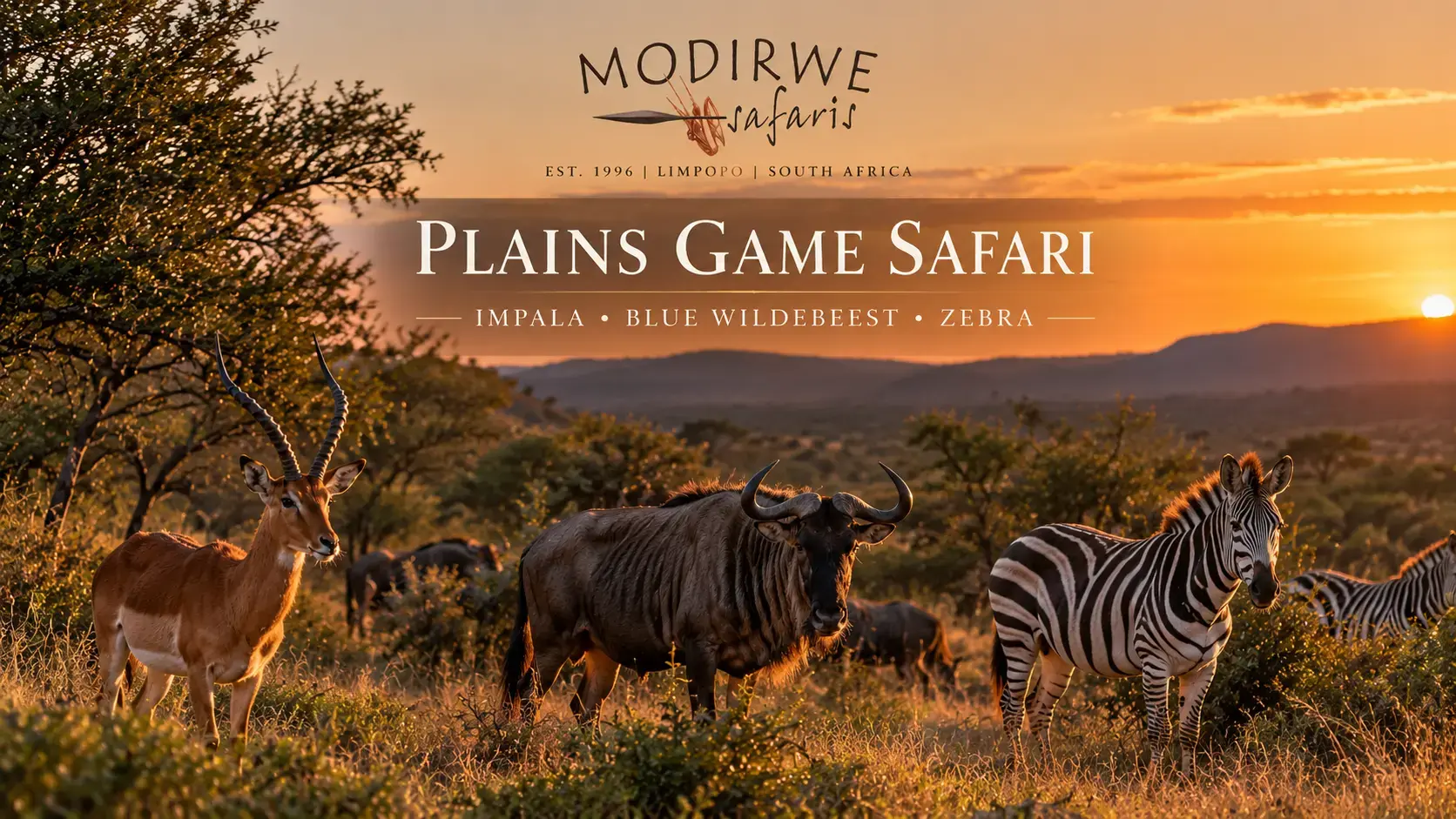
Planning your first South African plains-game safari? Compare impala, blue wildebeest and plains zebra, what makes each hunt different, how to prepare and how these iconic species can form part of a Limpopo safari with Modirwe Safaris.
For many international hunters, the first African safari starts with one simple question:
Which plains-game species should I hunt first?
There is no single correct answer.
A South African plains-game safari can combine species with very different behaviour, habitat preferences and hunting experiences.
Three animals that illustrate that variety particularly well are the impala, blue wildebeest and plains zebra.
At Modirwe Safaris in Limpopo, South Africa, these species can form part of a broader plains-game safari depending on availability, the package selected and your personal hunting goals.
This guide explains what makes each species different, what first-time African hunters should expect and how to prepare for a multi-species plains-game safari.
What Is a Plains Game Safari?
The term plains game is commonly used in the African safari industry to describe a broad group of antelope and other non-dangerous game species pursued during hunting safaris.
Despite the name, plains-game hunting does not necessarily take place on open plains.
In Limpopo, hunts may take place in:
- Bushveld
- Woodland
- Grassier open areas
- Thicker vegetation
- Undulating ground
- Areas around water and feeding habitat
That variation is one of the reasons a plains-game safari can be so interesting.
One species may require a completely different approach from another species hunted on the same trip.
Why Combine Several Species on One Safari?
A multi-species plains-game safari gives a hunter the opportunity to experience different animal behaviour, terrain and hunting situations during the same visit.
An impala hunt may require a very different approach from a blue wildebeest stalk.
A zebra hunt may involve carefully studying a herd and waiting for an appropriate opportunity.
The result is that the safari becomes more than simply repeating the same type of hunt several times.
For a first-time African hunter, this variety is one of the strongest reasons to consider a plains-game package.
Impala: A Classic African Plains-Game Species
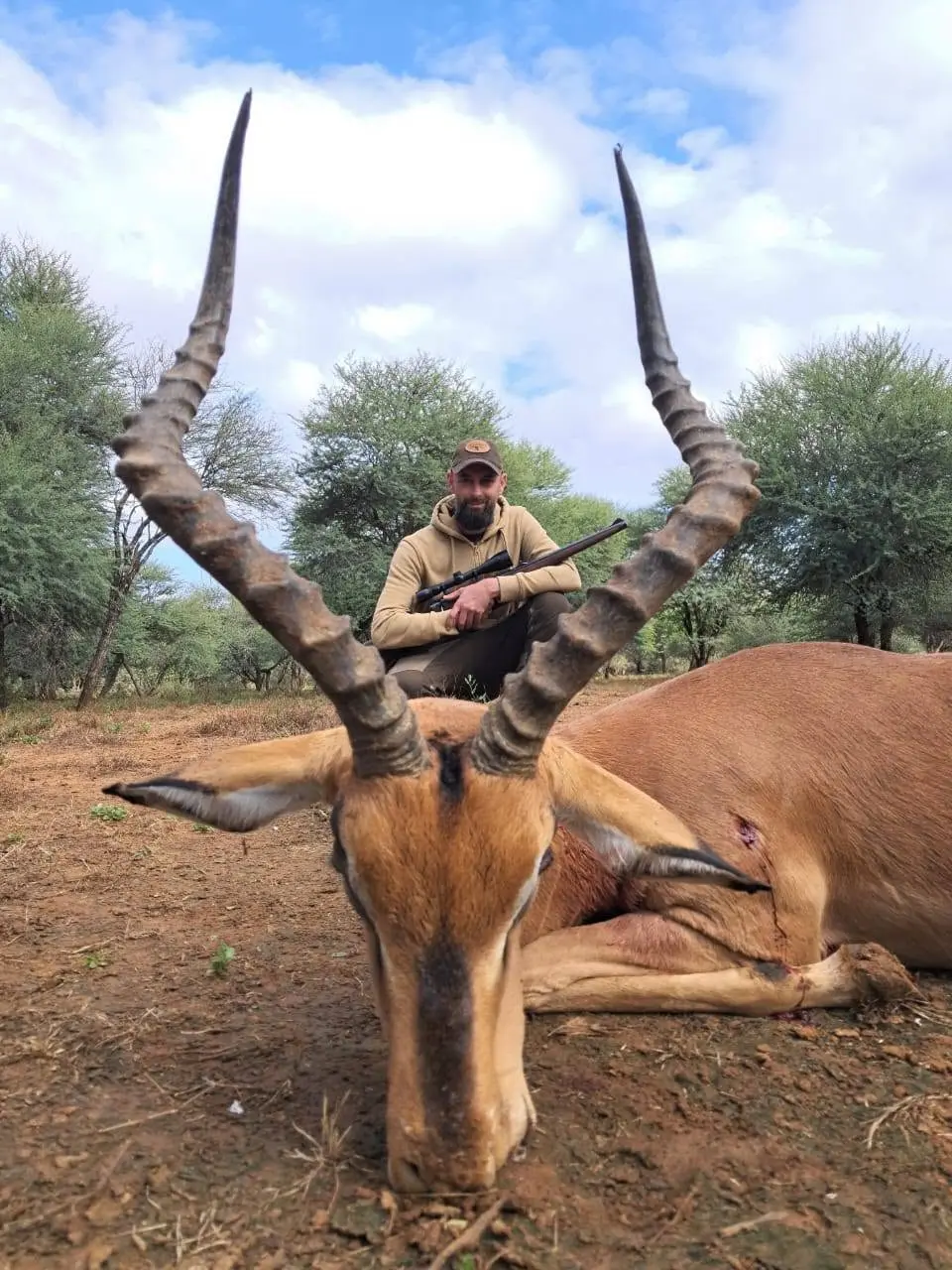
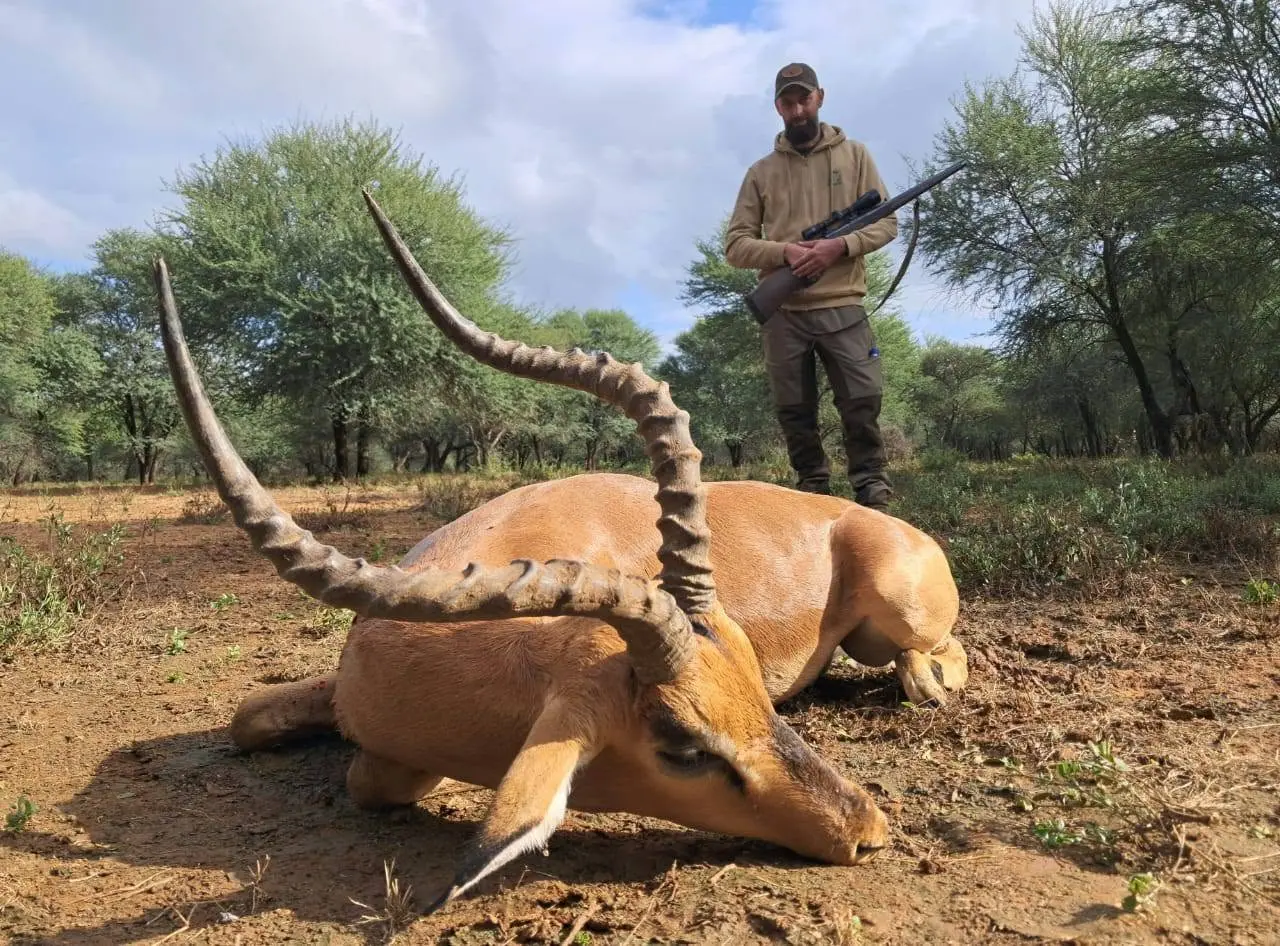
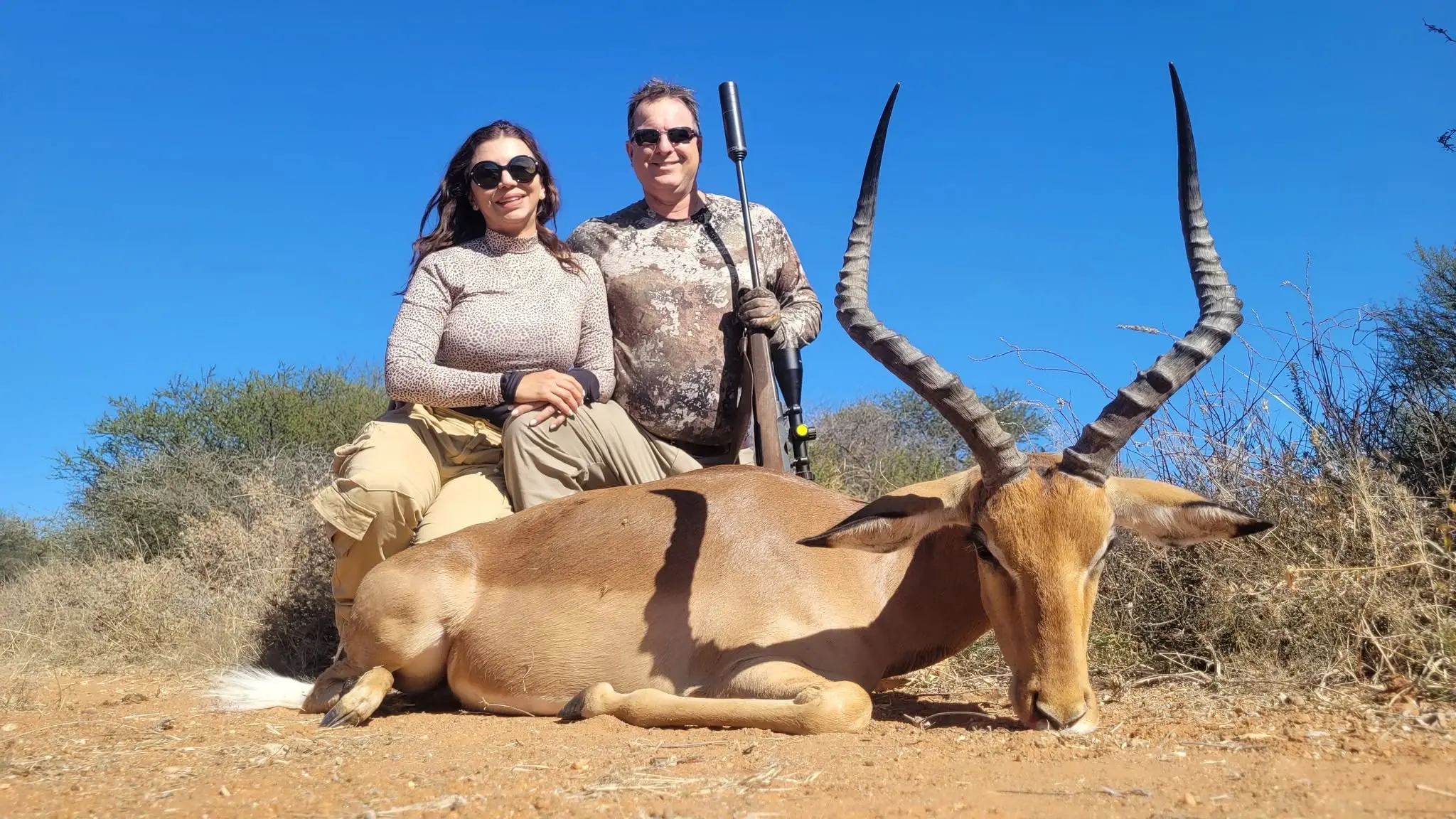
The common impala, Aepyceros melampus, is one of Africa's best-known antelope species.
SANBI currently lists the common impala as Least Concern in South Africa and describes the species as widespread, common and abundant across numerous protected areas and private wildlife properties.
The species occurs naturally across parts of eastern and southern Africa and remains particularly strongly associated with the wildlife areas of northeastern South Africa.
For a first-time safari hunter, impala can be an excellent introduction to African hunting because the animal may look familiar and approachable at first — but hunting a mature ram can be far more challenging than expected.
What Makes Impala Hunting Interesting?
Impala are alert animals and are often found in groups.
This means the hunter is rarely dealing with only one pair of eyes and ears.
Even when the intended animal is standing still, other animals in the group may detect movement or danger.
Patience and careful observation therefore become important parts of the hunt.
Your PH may spend time evaluating several animals before identifying an appropriate ram and deciding whether a stalk or shot opportunity should be attempted.
Impala for a First African Safari
Impala is often a logical species for a first safari because it introduces the hunter to:
- African herd behaviour
- Careful trophy evaluation
- Walk-and-stalk hunting
- Working with shooting sticks
- Following quick instructions from a Professional Hunter
Do not mistake common for easy.
A good mature impala ram can still provide a very rewarding hunt.
Blue Wildebeest: Power, Herd Behaviour and Patience
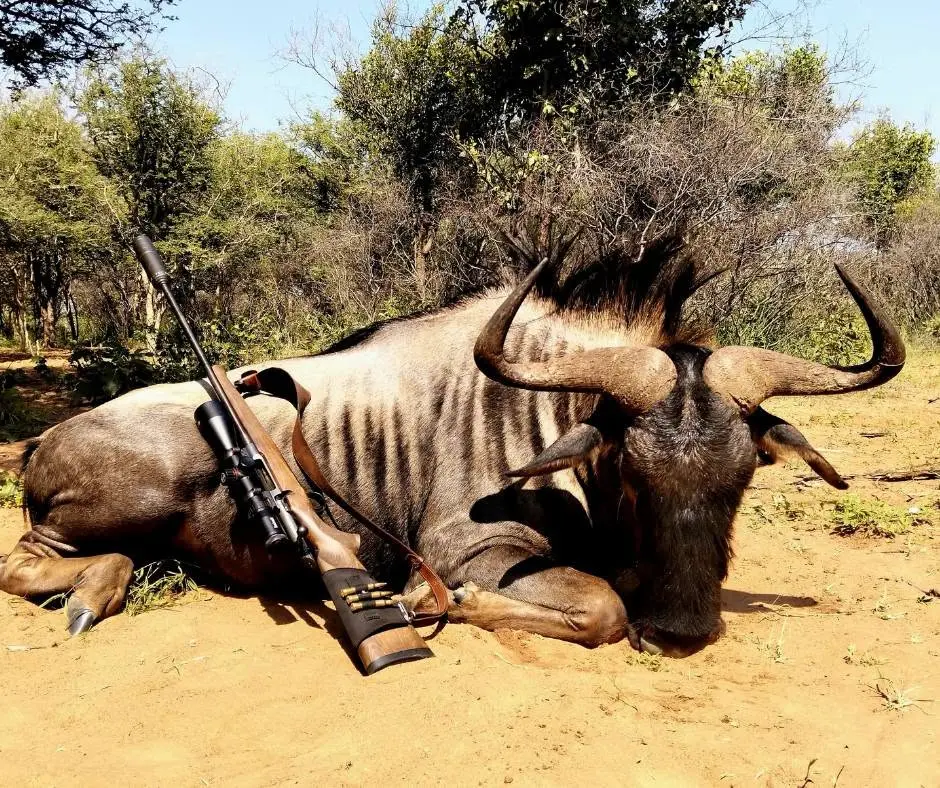
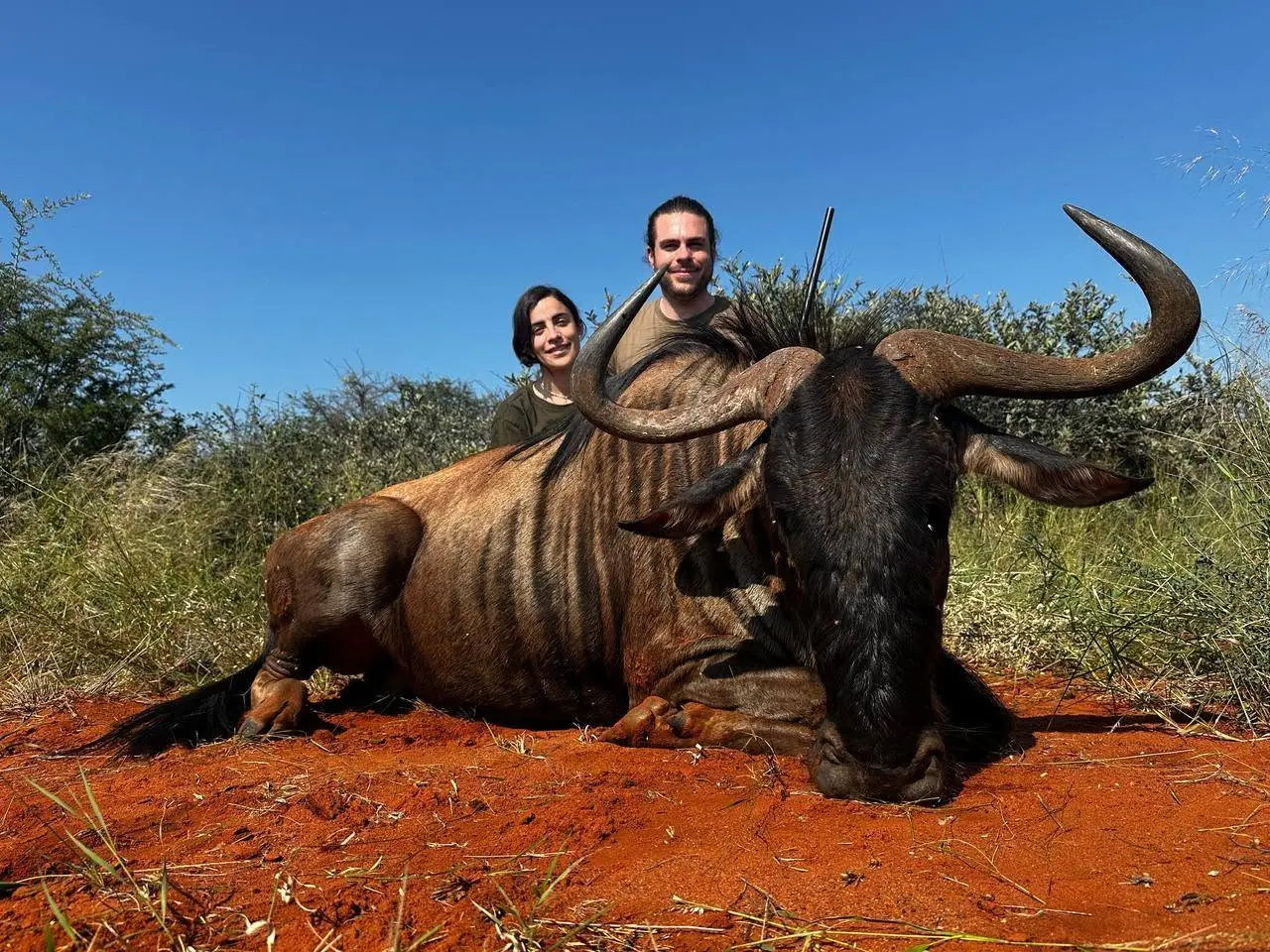
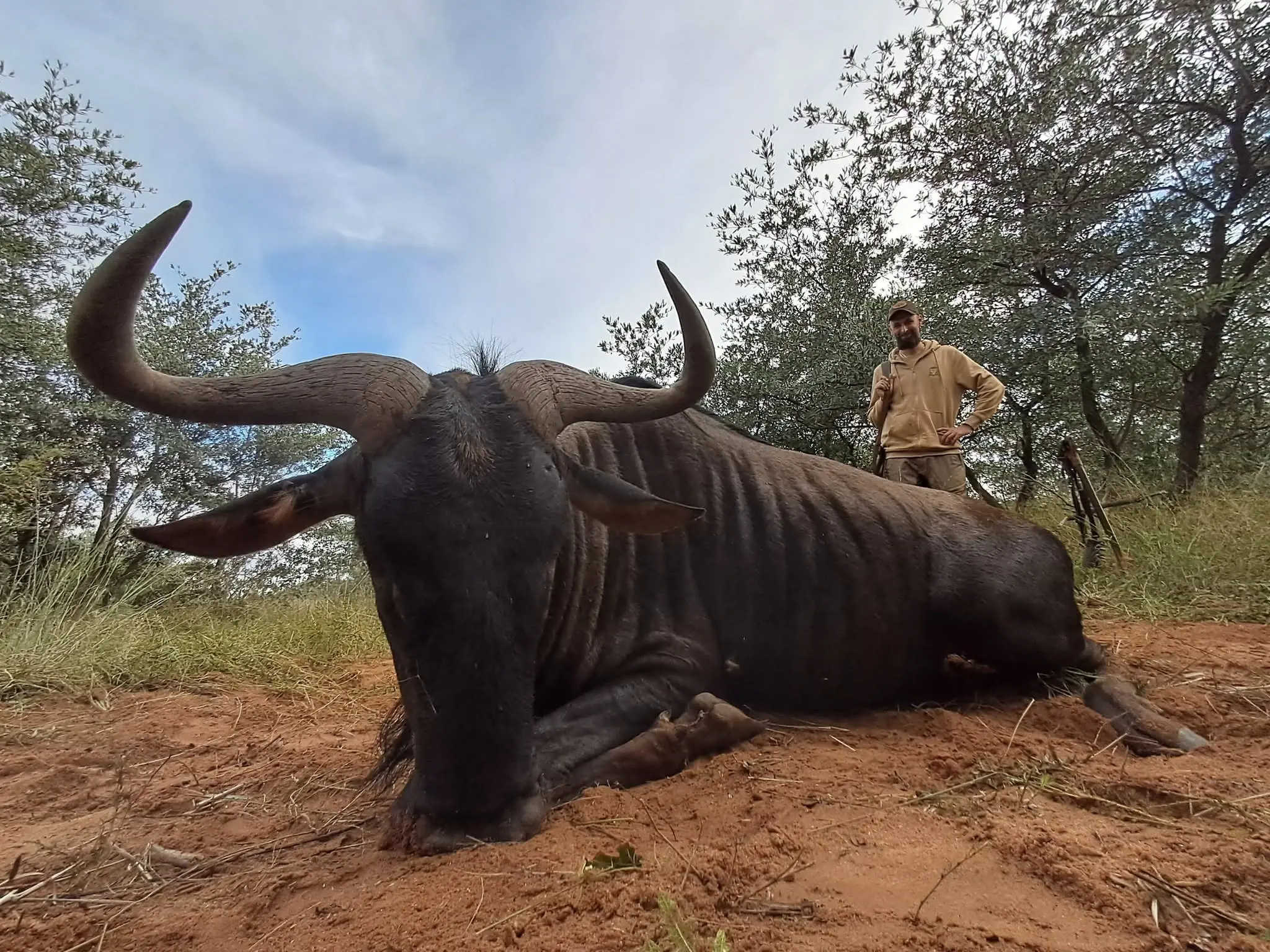
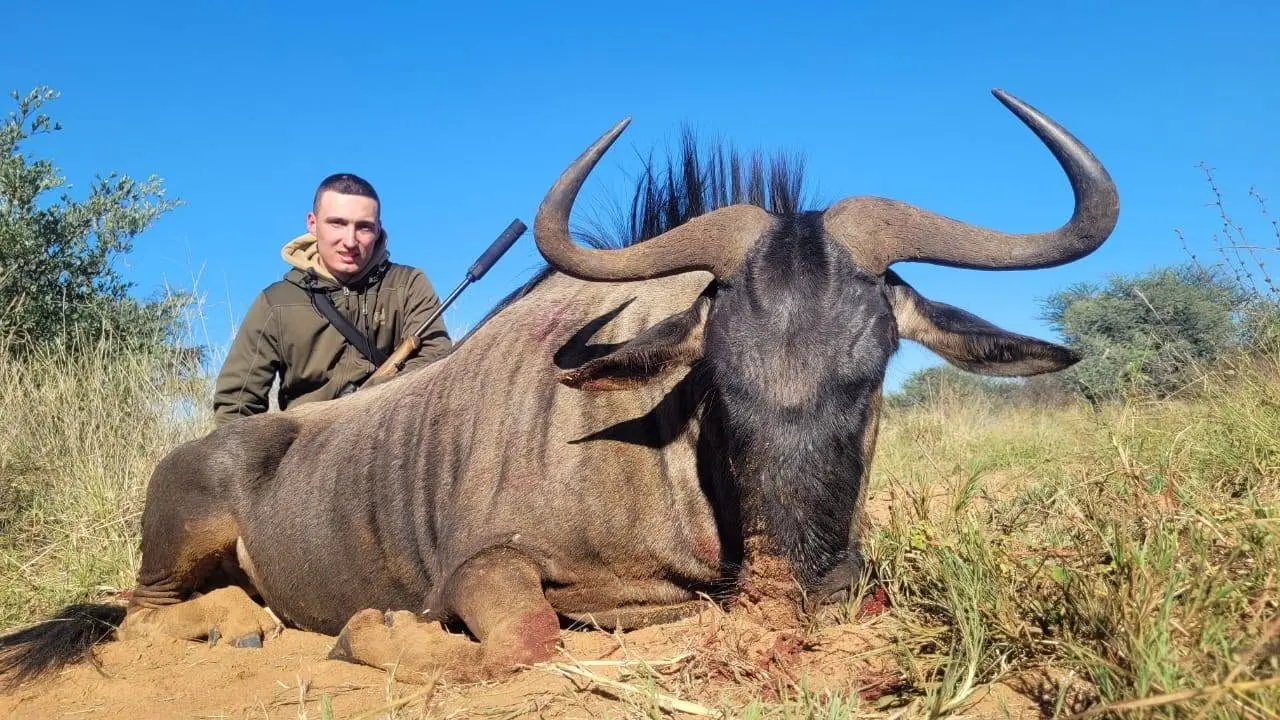
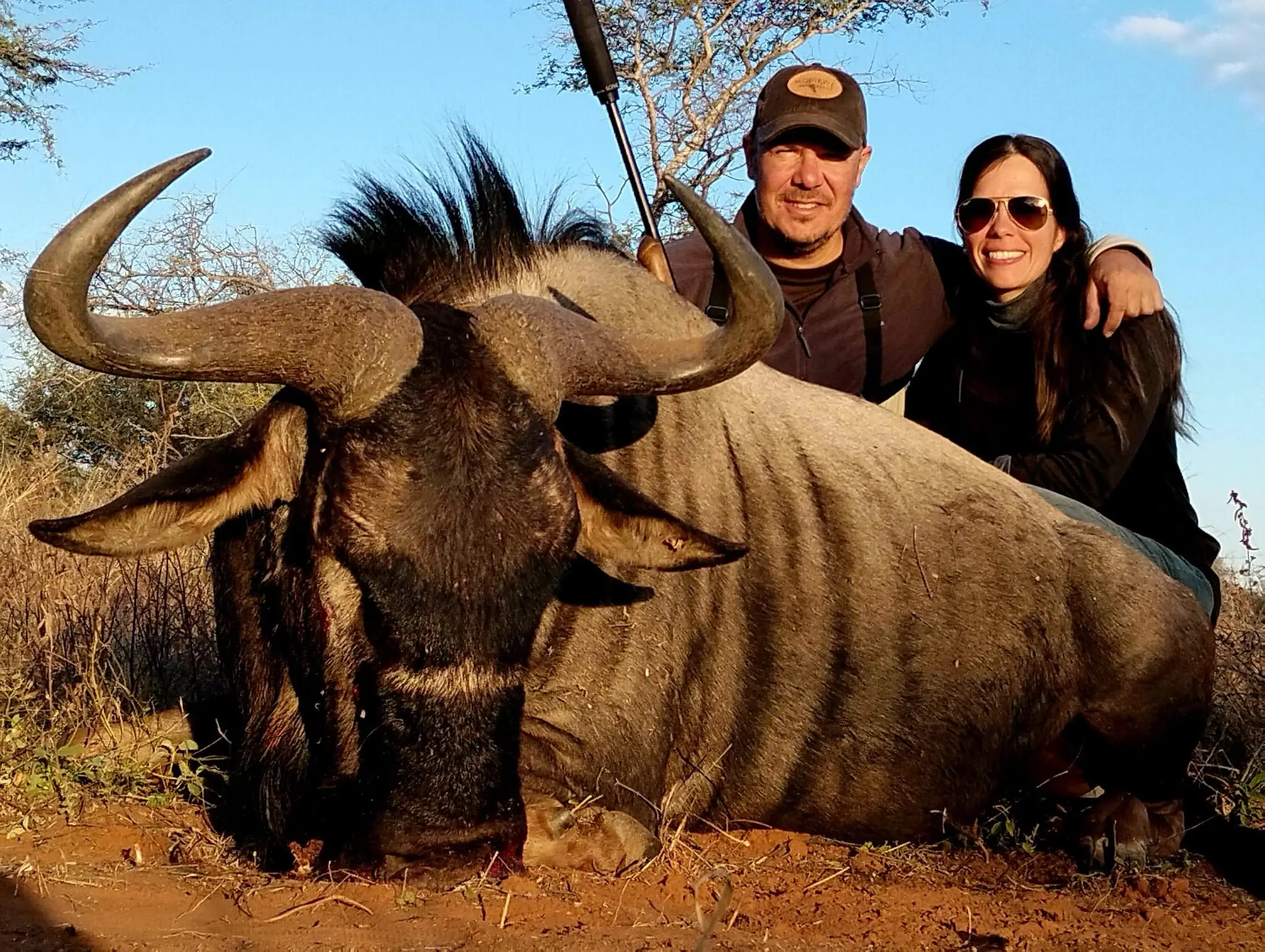
The blue wildebeest, Connochaetes taurinus, is a considerably larger animal and creates a very different hunting experience.
SANBI describes blue wildebeest as being strongly associated with savanna woodland and short grassland, with shade and drinking water important habitat requirements.
They are predominantly grazers and are often encountered in groups or breeding herds.
In South Africa, blue wildebeest naturally occur across much of the northern part of the country and have also been widely introduced to suitable wildlife properties elsewhere.
Why Is Blue Wildebeest Hunting Different?
The size of the animal immediately changes the character of the hunt.
Instead of focusing only on getting close enough, the PH and hunter may need to spend considerable time:
- Locating the correct herd
- Evaluating individual animals
- Separating one animal visually from others
- Waiting for a clear and responsible opportunity
- Managing wind and movement
The presence of multiple animals can make patience particularly important.
A hunter should never rush simply because several animals are visible at once.
Why Hunters Remember Their First Wildebeest
For many international hunters, a blue wildebeest feels like the moment the safari begins to become distinctly African.
The body size, dark colouring, sweeping horns and herd behaviour give the species a very different presence from smaller antelope.
It is also a species where preparation and confidence with your equipment become especially important.
Plains Zebra: One of Africa's Most Recognisable Animals
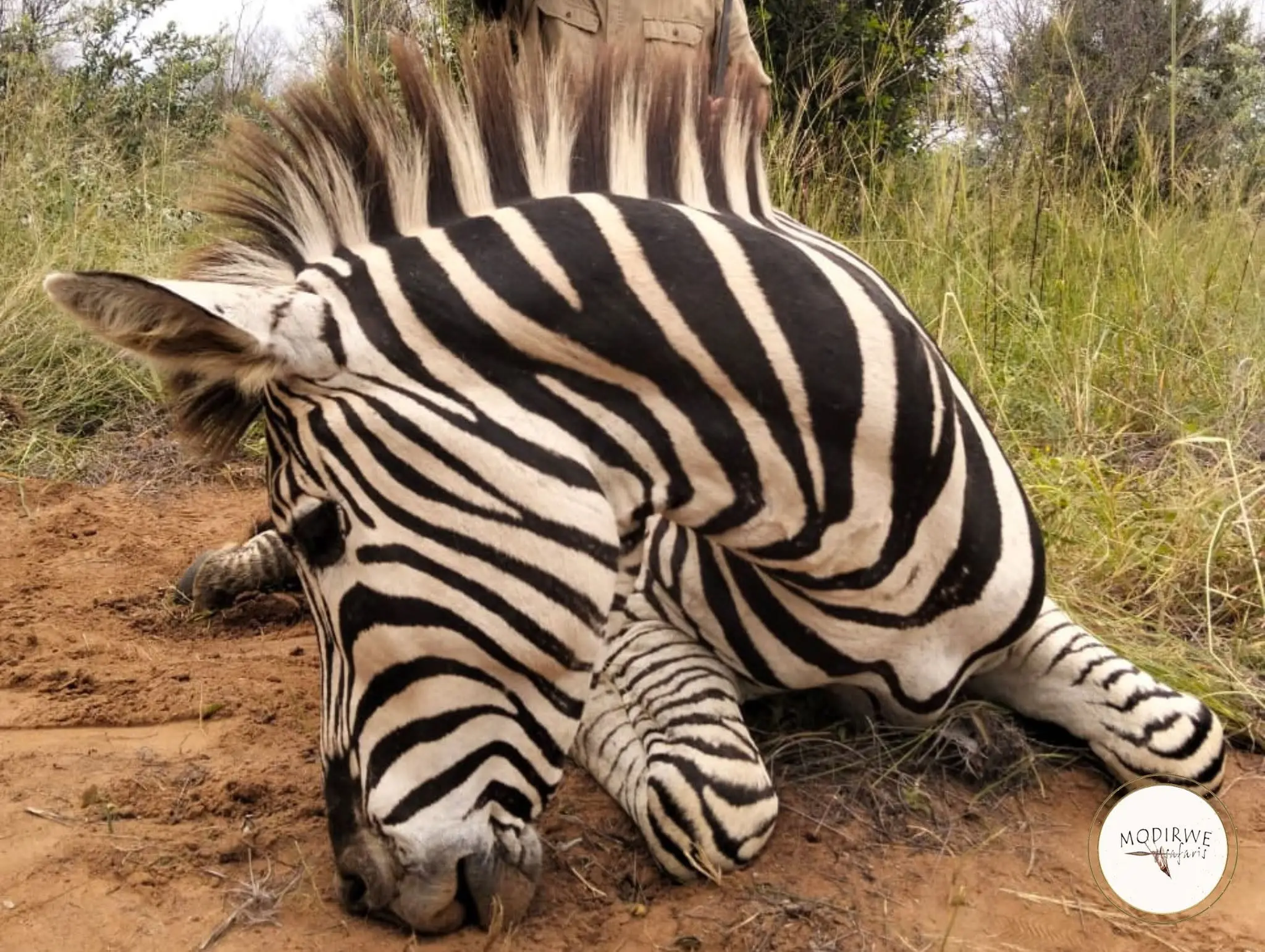
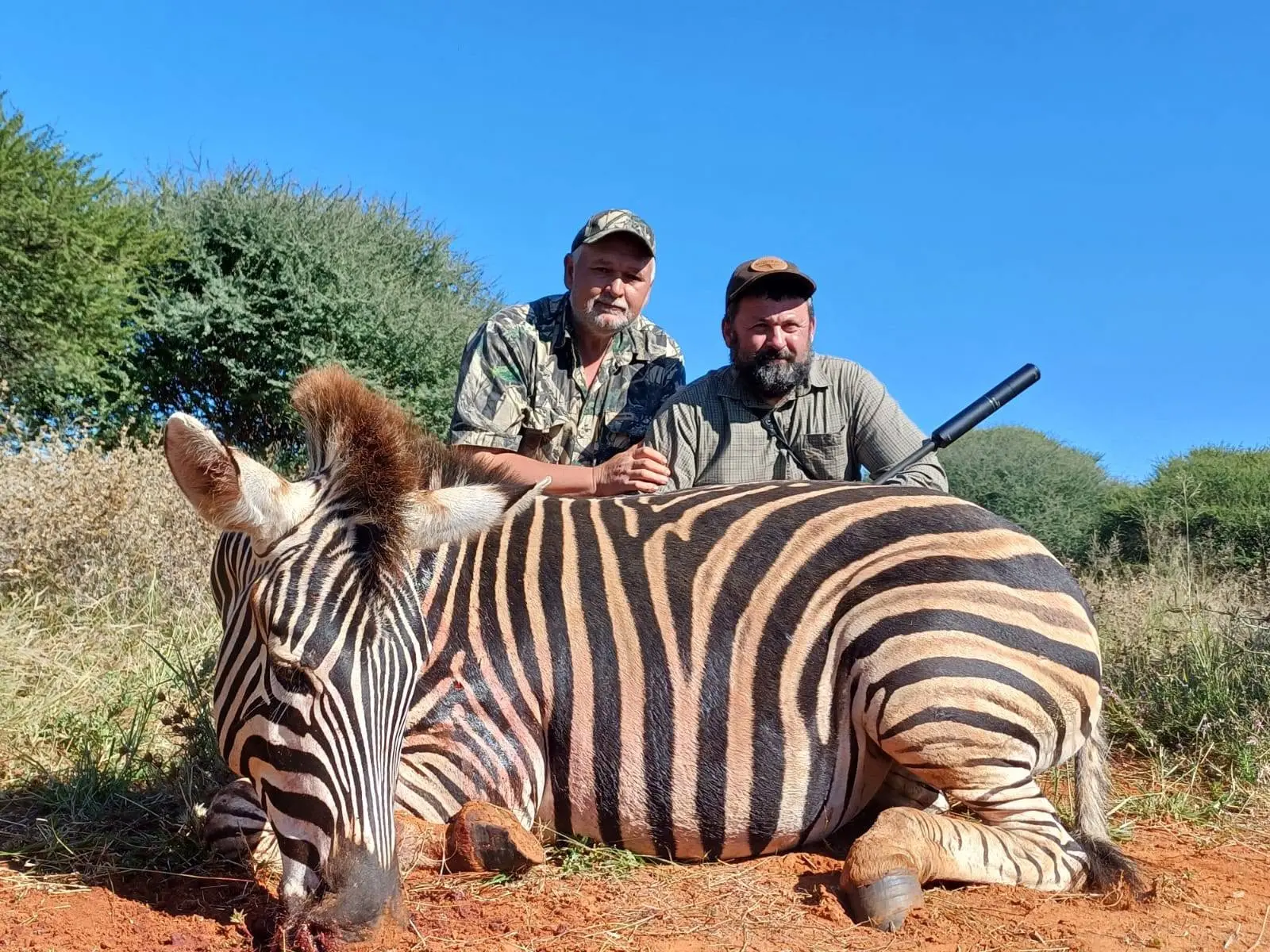
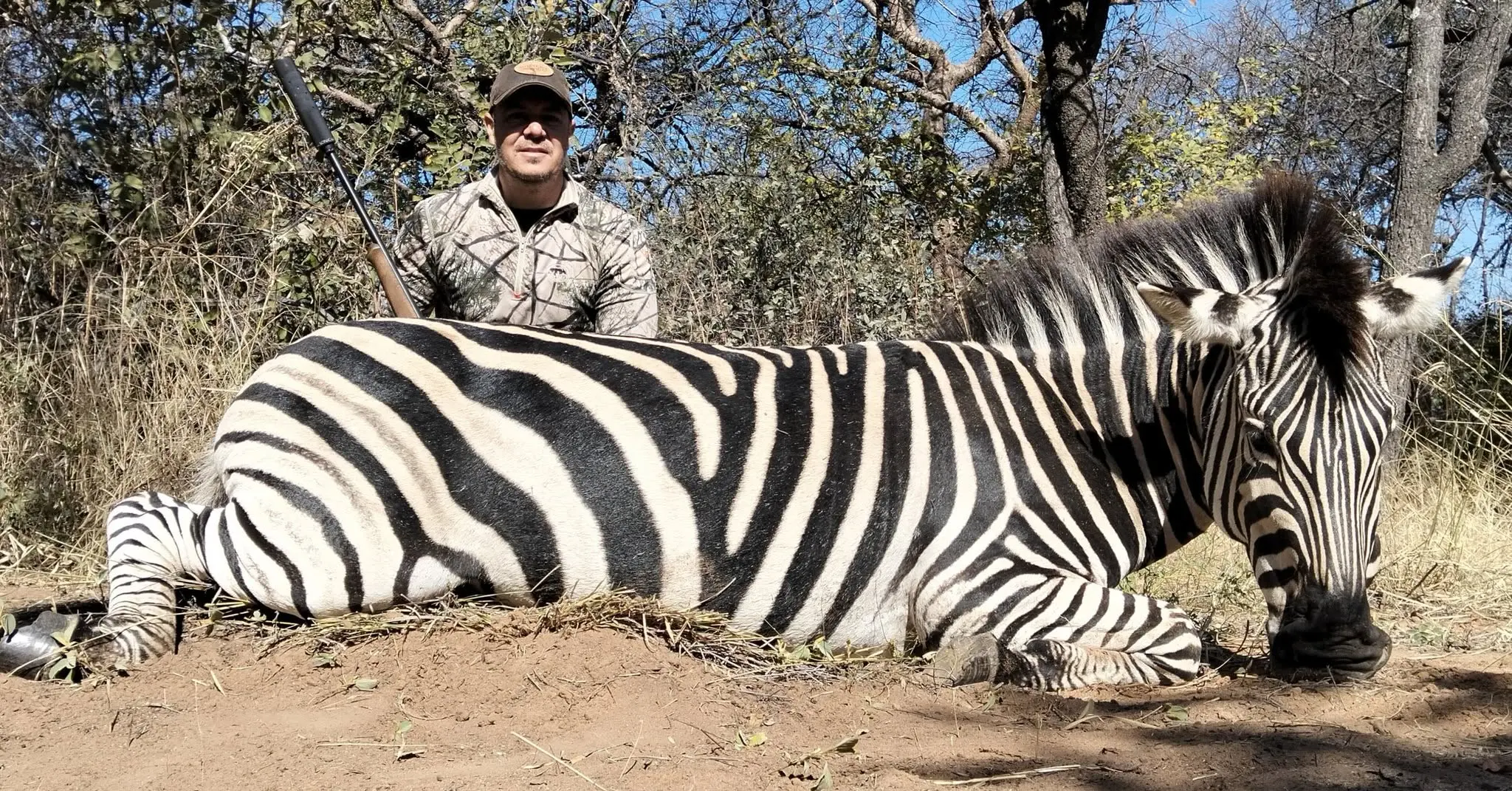
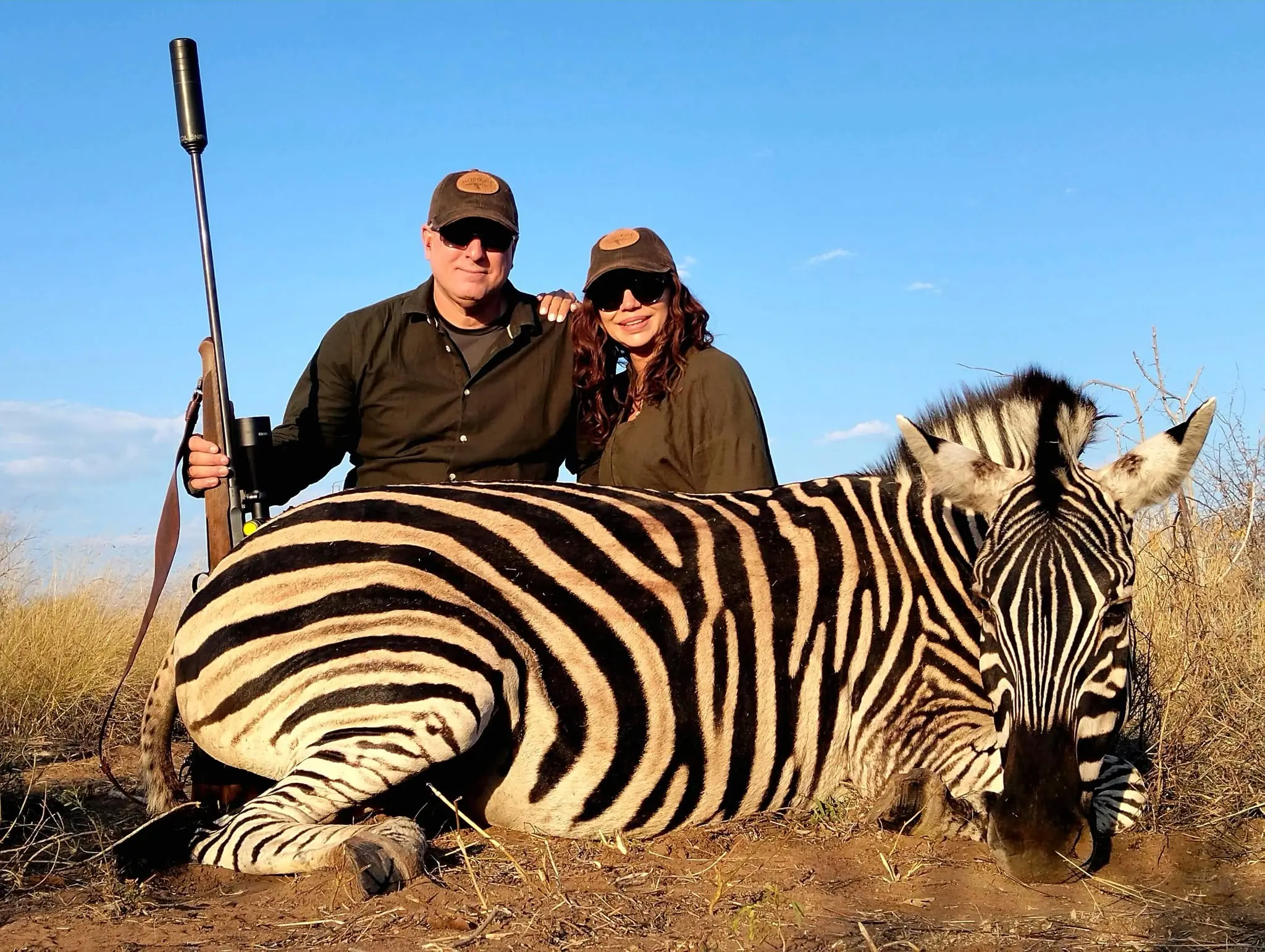
Few animals are as immediately associated with Africa as the plains zebra, Equus quagga.
SANBI describes plains zebra as adaptable animals that use a broad range of habitats, including open grasslands and savanna woodland.
They are highly social animals and commonly occur in family groups consisting of a stallion, females and their offspring, while bachelor groups may also occur.
Their social behaviour makes hunting them very different from pursuing a solitary animal.
Why Can Zebra Hunting Be Challenging?
A group of zebra means several animals are observing the surroundings.
The hunter and PH may need to wait for:
- The correct animal to become clearly identifiable
- A safe background
- Other animals to move out of the way
- A suitable angle
- A responsible shooting opportunity
This can require considerably more patience than a visitor might expect from watching zebra casually in a tourism setting.
Why Zebra Is Such a Distinctive Safari Species
A zebra hunt provides a combination of open-country observation, herd behaviour and one of Africa's most iconic animals.
No two zebra have exactly the same stripe pattern, giving every individual a distinct appearance.
For some hunters, zebra becomes one of the most memorable animals of the entire safari precisely because it is so strongly associated with the African landscape.
Impala vs Blue Wildebeest vs Zebra
These three species illustrate why a plains-game safari cannot be reduced to one type of hunting.
Blue Wildebeest: Larger, powerful and frequently associated with herd situations. Requires patience, identification and good shooting preparation.
Plains Zebra: Highly social and extremely distinctive. Herd positioning and waiting for a clear opportunity can become a major part of the hunt.
Which Species Is Best for a First African Safari?
There is no universal first species.
A hunter who wants an introduction to African antelope hunting may naturally be drawn to impala.
Someone wanting a larger-bodied plains-game animal may prefer blue wildebeest.
Another hunter may have dreamed of hunting a zebra since childhood.
Rather than asking which animal is objectively "best", ask:
- Which species are most important to me personally?
- How many days do I have available?
- Do I prefer rifle or bow hunting?
- Do I want several species or one primary target?
- Am I travelling with another hunter or observer?
That information helps Modirwe plan a safari around the experience you actually want.
Can You Hunt These Species With a Rifle or Bow?
Potentially, yes, subject to the applicable requirements and circumstances of the hunt.
Modirwe Safaris currently offers both rifle hunting and bow hunting.
South Africa's national hunting-method standards classify impala as medium-sized game for bow-hunting purposes, while wildebeest and zebra fall within the large-game category.
The national standards therefore prescribe different minimum kinetic-energy and arrow-weight requirements for these categories.
Do not select your bow setup based only on a blog article.
Provincial rules and the circumstances of the particular safari can also matter, so your complete equipment setup should be confirmed before travelling.
For a detailed comparison, read:
Rifle vs Bow Hunting in Limpopo: Which Safari Experience Is Right for You? →
What About Rifle Calibre?
There is no single rifle calibre that automatically becomes the correct choice for every species on a plains-game safari.
The animal being hunted, ammunition, terrain, expected conditions and the hunter's ability all matter.
A rifle you know well and shoot accurately is generally more useful than choosing an unfamiliar firearm simply because someone online describes it as the perfect African rifle.
Discuss your species list with your Professional Hunter before travelling.
If you are bringing your own rifle into South Africa, also read our:
Bringing Your Rifle to South Africa: SAPS 520 Guide →
What Should You Practise Before the Safari?
Preparation does not mean simply firing a few shots from a comfortable bench.
Before travelling, practise:
- Shooting from sticks
- Standing and kneeling positions where appropriate
- Getting into position efficiently
- Following short instructions
- Remaining steady after walking
- Knowing your realistic maximum comfortable range
Your PH does not need you to arrive as a competition shooter.
What matters is knowing your own ability and being willing to pass on a shot that you are not comfortable taking.
Do Not Arrive With a Fixed Shooting Distance in Mind
One of the most misleading pieces of safari advice online is a single "average African hunting distance".
The bushveld does not work that way.
One opportunity may occur in thicker vegetation at relatively close range, while another can occur across more open ground.
Terrain, vegetation, species, weather and animal behaviour all affect the final situation.
Prepare for variety rather than one exact number.
What Happens After an Animal Is Taken?
After a successful hunt, your PH and safari team can assist with the next steps relating to the animal, field preparation and arrangements for trophy processing or taxidermy.
What happens next depends on what the hunter wants to do with the trophy and where it will eventually be shipped.
International export and taxidermy requirements can differ according to country and species.
We will cover this process in a dedicated Modirwe guide rather than trying to compress all of those requirements into one paragraph.
Can Impala, Wildebeest and Zebra Be Included in a Package?
Yes, these species can form part of Modirwe's package planning, depending on the package and current availability.
At the time this article was published, Modirwe Safaris' current 2026 Gold Package lists:
- Impala
- Blesbuck
- Warthog
- A choice of Zebra or Blue Wildebeest
- A choice of Nyala or Waterbuck
The published package is listed as 5 days / 6 nights for US$6,950.
Always check the current package before booking:
View the current Modirwe Safaris hunting packages →
What Other Plains Game Can You Consider?
Your safari does not have to be limited to these three species.
Modirwe's current wildlife and pricing information includes a broader selection of plains-game species, subject to availability and the hunting area being used.
These include animals such as:
- Greater kudu
- Nyala
- Waterbuck
- Blesbuck
- Warthog
- Springbuck
- Oryx
- Eland
- Sable
- Red hartebeest
- Steenbuck
Explore our:
Modirwe Safaris Animals page →
How Many Species Should You Plan for?
More is not automatically better.
A safari should leave enough time to enjoy the hunt rather than feeling like a race through a checklist.
The correct number depends on:
- Length of your safari
- Species availability
- Weather and conditions
- How selective you want to be
- Whether you are rifle or bow hunting
- How much time you want to spend relaxing or sightseeing
Tell Modirwe which animals are priorities and which are optional.
That allows the safari to remain flexible.
Can Family or Non-Hunters Come Along?
Yes.
A plains-game safari does not need to be a trip only for hunters.
Modirwe welcomes families, friends and companions, and the lodge offers accommodation, a bar and lounge, swimming pool, Wi-Fi, meals and daily laundry.
Tourism trips can also be discussed for guests who want to experience more of South Africa during their visit.
See our:
What Should You Pack?
Pack for the conditions rather than trying to bring everything you own.
Comfortable broken-in boots, practical hunting clothing, layers for changing temperatures and your essential travel documents are more important than an oversized suitcase.
Modirwe also provides daily laundry, which helps international guests pack lighter.
Use our:
Modirwe Safaris Packing Guide →
Frequently Asked Questions
What is plains-game hunting in South Africa?
Plains-game hunting refers broadly to hunting African antelope and other non-dangerous game species. Depending on the region, it can take place in open grassland, woodland or thick bushveld rather than only on open plains.
Is impala a good species for a first African safari?
Yes. Impala can provide an excellent introduction to African antelope hunting because hunters need to learn herd awareness, trophy evaluation, stalking and working closely with a Professional Hunter.
Is blue wildebeest difficult to hunt?
Blue wildebeest can be challenging because of their size, herd behaviour and the need to identify an appropriate animal and wait for a responsible opportunity.
Are plains zebra difficult to hunt?
They can be. Zebra are social herd animals, so multiple animals may be alert to movement or disturbance. A hunter may need to wait for the correct animal to separate sufficiently for a safe and responsible opportunity.
Can I hunt impala, blue wildebeest and zebra on the same safari?
Potentially, yes. The combination depends on your package, safari length, species availability and hunting area. Modirwe's published 2026 Gold Package currently includes impala and a choice between zebra and blue wildebeest.
Can these species be bow hunted?
Yes, subject to applicable legislation, equipment requirements and the conditions of the hunt. South Africa's national hunting-method standards classify impala as medium game and wildebeest and zebra as large game for bow-hunting equipment requirements.
Which is better for a first safari: impala, wildebeest or zebra?
There is no universal best choice. Impala provides a classic African antelope experience, blue wildebeest offers a larger-bodied herd-animal challenge, and zebra provides a distinctive and highly recognisable African safari experience. Your personal priorities should guide the choice.
How much does a plains-game safari cost?
The cost depends on the number of days, hunter-to-PH arrangement, species selected, accommodation, transport, trophy fees and whether you choose a package or daily-rate structure. Always use the latest Modirwe pricelist or request a current quotation before booking.
Can I bring my own rifle?
Yes, subject to the applicable South African firearm-import requirements as well as airline, departure-country and transit-country rules. You can also ask Modirwe about rifle-rental options.
Can non-hunters join the safari?
Yes. Family members, partners and friends can join, and non-hunting activities or tourism options can be discussed when planning the trip.
Official & Reference Sources
This article combines Modirwe Safaris' current package and species information with South African biodiversity and hunting-method sources.
- SANBI — Common Impala
- SANBI — Blue Wildebeest
- SANBI — Plains Zebra
- South African Government — National Norms and Standards for Hunting Methods
- Modirwe Safaris — Current Hunting Packages
Planning Your First Plains-Game Safari?
A plains-game safari is one of the best ways to discover how varied African hunting can be.
An impala, blue wildebeest and zebra may all share the same landscape, but each requires a different approach.
That variety is what turns a list of animals into an actual safari experience.
Tell Modirwe which species matter most to you, how many days you have available, whether you prefer rifle or bow hunting and who will be travelling with you.
We can then help plan the safari around your priorities rather than forcing every hunter into the same itinerary.
View the current Modirwe Safaris packages or contact us directly to discuss your species wishlist, travel dates and hunting preferences.
Important Hunting, Pricing & Travel Disclaimer
Please note: This article is provided for general educational and safari-planning purposes and reflects information available at the time of publication.
Species availability, package prices, trophy fees, hunting areas, permits, provincial requirements, firearm and bow regulations, airline rules and other travel requirements may change.
Requirements may also differ depending on the hunter's nationality, province, property, species, equipment and hunting method.
Any prices or package inclusions mentioned in this article reflect Modirwe Safaris' published information at the time of writing and should not be treated as a permanent quotation or guarantee.
Hunters remain responsible for confirming all current legal, travel, firearm, bow and import requirements before travelling.
If you are unsure, please contact Modirwe Safaris before finalising your trip. We can help point you toward the appropriate current information and confirm the latest Modirwe package and species availability.
Modirwe Safaris — Steenbokpan, Limpopo, South Africa
Established 1996
Plan your own Modirwe safari
Contact us for hunting packages, tourism experiences and available safari dates.
Plan Your Safari